
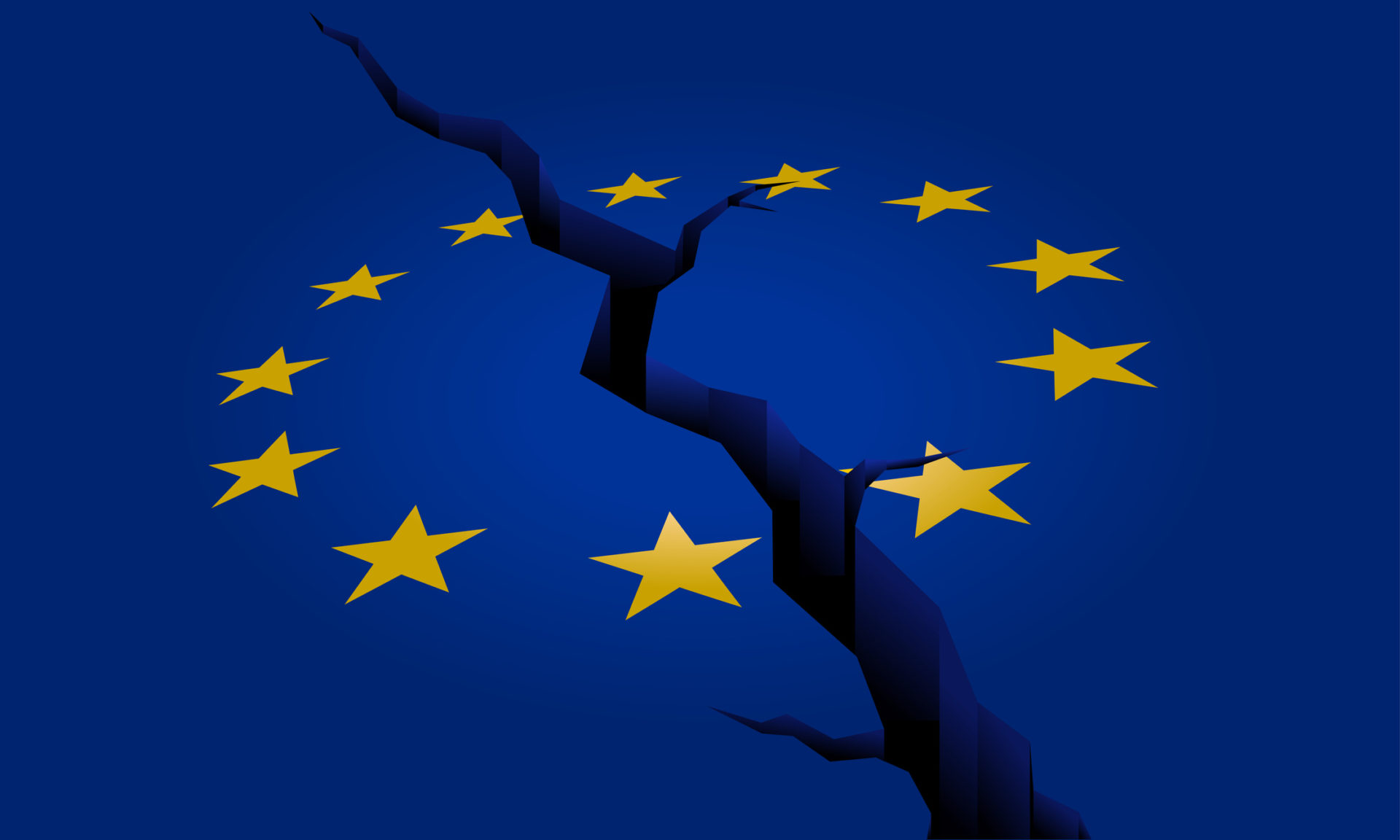
The realisation of a marginalised Europe
At the beginning of the 21st century, Europe, once at the heart of global economic power, now seems relegated to the rank of observer on the international stage. Faced with major crises — the war in Ukraine, the Middle East conflict or tensions between Israel and Iran — the European Union often appears powerless, locked in sterile diplomacy devoid of impact. This discrepancy between its economic weight and its geopolitical role raises an essential question: why does Europe, despite its wealth and history, struggle to truly exert influence on the decisions that shape the world?
This question is set in a historical context where Europe, which dominated the world from the 15th to the 19th century, has seen its role evolve profoundly. European integration, unique in its level of cooperation between states, has reinforced the continent's stability and prosperity, but is struggling to emerge as an autonomous geopolitical power. In a world marked by the rise of powers with more rigid governance and the return of power politics, multilateral diplomacy and soft power are no longer sufficient to ensure its influence and security.
This transformation goes beyond the mere confines of the European continent: it also affects its neighbours and partners, for whom a strong, united and sovereign Europe remains a pillar of stability, prosperity and shared security. From the southern shore of the Mediterranean, it is acutely apparent that Europe’s future direction will have effects far beyond its borders. The time has come to outline a new vision, capable of combining strength with a sense of responsibility, in an increasingly uncertain world where regional stability will also depend on European agility in the face of emerging challenges.
European diplomatic failures: a strategy unsuited to today's world
The Iranian nuclear standoff (2003-2025)
Since 2003, the European Union — with Paris, London and Berlin playing a leading role — has endeavoured to curb the progress of the Iranian nuclear programme by combining diplomatic dialogue and economic pressure. Despite two decades of sustained efforts, progress has remained fragile and the agreements reached have failed to sustainably stabilise the situation.
Recent changes in the context, marked in particular by external interventions, have highlighted the limits of a European approach often relegated to the background by geopolitical dynamics driven by other major powers.
Marginalisation in the Israeli-Iranian crisis
Faced with unprecedented military escalation between Israel and Iran, Europe is trying to assume a moderating role, multiplying calls for dialogue and de-escalation. But after several days of Israeli strikes on sensitive Iranian sites, followed by massive missile and drone retaliation, the European Union is struggling to influence the course of events.
The conflict has taken on a new dimension with American strikes targeting key facilities of the Iranian nuclear programme, accentuating its international character. In this context, Europe remains largely on the sidelines of strategic decisions, which feeds the sense of a decline in its diplomatic influence. While the major powers are actively involved, European reactions remain muted and without real impact, revealing a lack of means and levers to influence a crisis dominated by military and geopolitical dynamics that go beyond it. The Union appears more as a spectator than as an influential actor on the international stage.
Persistent structural weaknesses
Beyond every crisis, European diplomacy suffers from deep-seated fragilities. Requiring unanimity among 27 states with divergent interests complicates and slows down all decision-making, preventing the EU from developing strong and reactive positions. The European Union often appears as a disordered actor, without a clear strategy or tactics suited to current geopolitical realities. This absence of a shared vision not only weakens European diplomacy, but also fuels the perception of a Europe incapable of playing a role worthy of its economic weight.
European military weakness: capabilities out of step with current challenges
Support for Ukraine, but a limited footprint
Since 2022, the EU has mobilised nearly €48 billion and helped train more than 70,000 Ukrainian soldiers to support Kyiv. Despite the scale of this effort, the impact on the ground remains limited: Europe manages to pool resources, but struggles to turn them into a decisive operational force.
Its support remains primarily focused on the provision of light equipment and training, leaving major strategic systems to the United States, which retains leadership in managing the conflict. This reality highlights a structural dependency that confines Europe to a supporting role rather than that of a central actor.
Lagging strategic capabilities
Beyond Ukraine, European armies lack heavy equipment and advanced technologies, whereas contemporary conflicts demand missiles, drones and sophisticated defence systems. Added to this is a fragmented defence industry: split between multiple competing national actors, it struggles to innovate and integrate, despite a total turnover of more than 600 billion euros and an anaemic growth rate. This fragmentation prevents the emergence of a coherent European force in the face of the American, Russian or Chinese giants.
To remedy this, the Union has launched initiatives such as the «Rearm Europe» plan, endowed with a €500 billion envelope. However, these projects remain in their infancy and run up against the continent's political complexity, where national interests continue to take precedence over the collective vision.
The failures of past interventions
Europe's military limitations are also revealed in its history of foreign engagements. In Libya, the 2011 intervention, initially praised, quickly turned into chaos for want of a post-conflict strategy, causing the collapse of the Libyan state and a major migration crisis. In Syria, Europe remained on the sidelines, leaving the United States, Russia, and regional actors, notably Turkey, Iran and Israel, to exert their full weight on the course and outcome of the crisis. More recently, the demand for the forced departure of European forces, notably French ones, combined with the emergence of the Wagner Group, has accentuated the decline of European influence in this strategic region.
Thus, between dispersed resources, a reliance on external partners and follow-up-free interventions, Europe still struggles to establish itself as a military actor worthy of its ambitions.
The root causes of European impotence
One institutional framework that hinders action
At the centre of European difficulties lies an institutional architecture ill-suited to the demands of today's world.
The unanimity rule, which requires the agreement of all 27 member states for any foreign policy decision, hinders responsiveness and collective ambition. This mechanism, supposed to protect national sovereignty, in practice becomes an obstacle to any strong initiative. The result: every capital defends its priorities, preventing the emergence of European leadership and a coherent common strategy. Instead of a single voice, Europe speaks in twenty-seven national agendas, diluting its influence on the international stage. The image is striking: as Henry Kissinger famously joked, «Europe? What's its phone number?» — a metaphor that illustrates the absence of a single, strong and audible voice.
Tried and tested… but outdated
Europe has long relied on «soft power» — dialogue, culture, economics — to shape its environment. Yet, in a context where power struggles and military might are returning to the fore, this approach is showing its limits: Europe finds itself a spectator, facing actors who prefer direct, sometimes coercive action to defend their interests. Its attachment to multilateralism and consensus, once sources of stability, is now coming up against the rise of regimes that do not hesitate to bypass the rules. This structural pacifism, inherited from the post-war era, can, despite its values, limit Europe in a world where force remains a decisive factor.
A persistent dependence on the United States
Finally, Europe's security remains closely linked to the United States. Despite an asserted desire to strengthen transatlantic solidarity, confirmed at the NATO summit in The Hague, the relationship remains unbalanced. Europe often has to adjust to changing American priorities, which hinders its strategic autonomy and regularly places its interests in the background.
In this context, it appears that the evolution of European defence towards greater autonomy, as well as the strengthening of the coherence of its foreign policy, remain major issues, whilst maintaining close cooperation with Washington.
The consequences of this impotence on the European future
Declining international credibility
Europe is struggling to maintain its diplomatic influence in sensitive areas such as the Balkans, where it has failed to impose lasting solutions in Kosovo or effectively stabilise Bosnia and Herzegovina, leaving the field wide open to Russia and Turkey.
This decline extends far beyond: excluded from major negotiations in the Middle East, Africa and Asia, the European Union is seeing its role as a global power seriously called into question.
Despite its economic weight, it remains an «economic giant» deprived of significant diplomatic influence to shape the world order.
Security called into question
European powerlessness goes beyond the image: it undermines the continent's security. Unresolved conflicts on the Union's doorstep, such as in Ukraine or the Caucasus, destabilise the region and threaten peace. This instability encourages foreign interventions, such as cyberattacks and disinformation campaigns, to which Europe is particularly vulnerable.
Furthermore, a heavy energy dependency on suppliers located in sensitive areas opens the door to pressure and blackmail, where energy becomes a lever for political influence, accentuating European fragility and dependency.
A questioning of the European project
This situation highlights internal tensions within the Union, linked to the diversity of national interests and the difficulty of finding common positions in the face of today's major challenges. It demonstrates the limits of European collective functioning, particularly when it comes to acting swiftly or speaking with one voice.
In this context, a reflection on what unites Europeans – their common identity, their values and their role in the world – seems necessary. Difficulties in protecting shared interests, defending founding principles or ensuring the security of citizens sometimes undermine the momentum of the European project.
If no policy or strategic adjustments are made, the Union could see its influence wane abroad, while facing internal tensions that risk affecting its cohesion and long-term capacity for action.
Perspectives and solutions: towards a geopolitical Europe?
Necessary institutional reforms
Some voices argue that institutional reforms could improve Europe's ability to respond to international challenges. For example, the unanimity rule that governs foreign policy decisions is sometimes considered too restrictive, limiting the speed of action required in a complex geopolitical context. Adapting this functioning could enable the Union to respond more effectively to crises by reducing the risks of deadlock.
In addition, the role of the High Representative for Foreign Affairs is often presented as a key lever for reinforcing Europe's diplomatic unity. Giving more powers and resources to this function could help assert a more coherent European voice internationally. Finally, the proposal for a European Security Council, capable of making strategic decisions more quickly, is also mentioned as a way to better coordinate political and military responses to current challenges.
Military capability development
To strengthen its strategic autonomy, Europe must boost its military capabilities. At the recent NATO summit in The Hague, member states committed to spending 5 % of their GDP on defence by 2035, a much more ambitious target than before. This new effort aims to modernise armed forces, invest in advanced technologies and become less dependent on foreign suppliers, particularly the United States.
Furthermore, Europe is seeking to better integrate its defence industry through joint projects in order to create new synergies, stimulate innovation and strengthen the sector's overall competitiveness.
Finally, the creation of a rapid reaction force, capable of operating autonomously, is also being considered as a strong signal of Europe's determination to be more responsive to crises.
Redefinition of the European strategy
Beyond material resources, some experts believe that Europe may need to review its geopolitical strategy in the face of shifting global power dynamics. The idea of strategic autonomy, championed by several European officials, appears as a major objective, even if it is still debated. This means that Europe would seek to protect its interests more independently, by developing a foreign and security policy less tied to Washington.
This geopolitical realism also implies adapting its alliances by diversifying its international partnerships, while maintaining a cautious balance. Reducing dependence on the United States does not mean isolating oneself, but rather strengthening the capacity to dialogue and negotiate with all global actors, according to Europe's own interests.
Rebuilding a geopolitical Europe: a shared necessity
Europe finds itself at a pivotal moment, called upon to make decisive choices regarding its role in a rapidly reshaping world.
Crises, from Ukraine to the Middle East, have highlighted a persistent gap between the European Union's ambitions and the reality of an international order based on power dynamics. For the countries of the Southern Mediterranean, which share deep historical, cultural and economic ties with Europe, the emergence of a strong, coherent and sovereign Europe represents a major asset for regional stability.
Failing a strategic and institutional reorientation, the Union risks remaining trapped in its image of an «economic giant but diplomatic dwarf», confined to a secondary role, weakened in its capacity to influence major security, development and transition issues. Yet today's challenges — whether climatic, migratory, energetic or geopolitical — know no borders.
That is why the time has come to initiate, between the two shores of the Mediterranean, a renewed dialogue based on listening, mutual respect and the desire to build common responses together. Faced with shifts in the global order, only sincere and balanced cooperation will make it possible to lay the foundations for a shared future, bringing stability, prosperity and peace.

 French
  English
  Chinese
  Arabic