
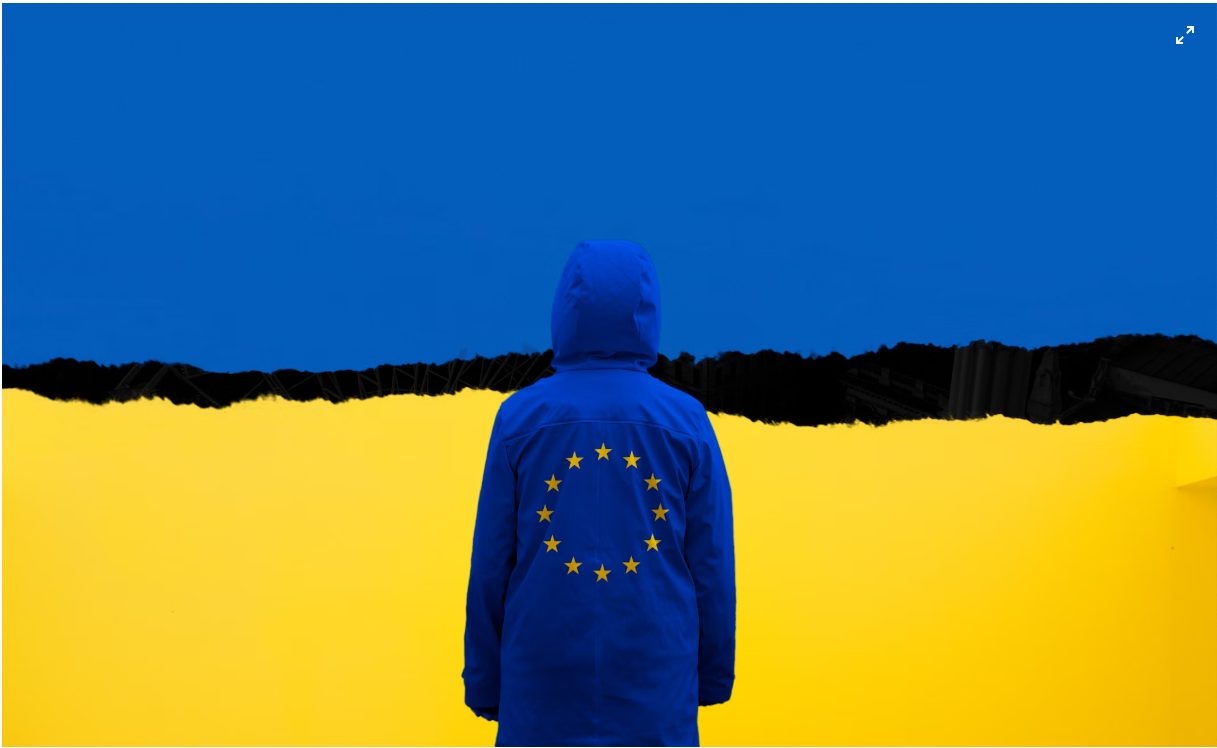
Europe challenged by its own strategic ambition
Ursula von der Leyen's second term at the head of the European Commission is beginning under the sign of a striking paradox. Never has the European Union so strongly displayed its ambition to assert itself as a major geopolitical player, and yet, the first months of this new legislative term are revealing the deep fractures that are hindering this aspiration. Behind the image of unity projected by the uncontested re-election of the President in December 2024, divisions over European defence remain gaping.
Eloquent figures
The figures speak for themselves: despite talk of a collective stepping up of efforts, military cooperation between member states is capped at 5 %, a far cry from the 35 % target. The creation in January 2025 of a European defence commissioner portfolio entrusted to the Slovak Maroš Šefčovič is certainly a strong symbol, but its paltry budget of 1.5 billion euros, which is barely 0.5 % of combined national military spending, illustrates the gap between ambition and reality.
The Merz line
The coming to power in Germany of Friedrich Merz further complicates the equation. A defender of a solid transatlantic anchor, he embodies a line in contradiction with the ambitions for strategic autonomy championed by other European capitals. The European Council of March 2025 laid bare these tensions: on the one hand, the partisans of increased pooling of defence capabilities; on the other, the states fiercely attached to their military sovereignty.
Tensions surrounding European defence
Three issues are crystallising tensions around European defence. Firstly, its funding: despite the stated ambition to strengthen cooperation, sovereignty-driven reluctance is holding back any decisive progress. Secondly, the initiative Re-arm Europe, launched by Ursula von der Leyen, which aims to mobilise up to 800 billion euros to bolster the continent's military capabilities in the face of growing challenges. This plan provides for a significant increase in national defence budgets, closer coordination of procurement, and enhanced military support for Ukraine. Furthermore, the temporary suspension of the rules of the Stability and Growth Pact will allow member states to increase their military spending without breaching European budgetary requirements. Lastly, the proposed anti-missile shield, estimated at 20 billion euros, raises the question of how it will be coordinated with NATO and integrated into a common defence strategy.
These strategic choices are shaping Europe's future as a geopolitical actor. Its ability to overcome these dilemmas will determine its weight on the international stage.
With the European defence summit of June 2025 just a few months away, the time has come for strategic clarification. Caught between the pursuit of power and a reliance on traditional alliances, and between integration and national instincts, Europe finds itself at a crossroads. Its future as a credible geopolitical actor will depend on its ability to move beyond these dilemmas and speak with a single voice in a world undergoing rapid reshaping.
The challenge of European cohesion
The war in Ukraine has highlighted the fractures in European defence. Two opposing visions exist:
- To the East, Poland and the Baltic states, marked by their history, are demanding an additional 40 billion euros and enhanced military integration.
- In the South, Italy and Hungary jealously defend their national prerogatives, fearing excessive centralization of military decisions.
Maroš Šefčovič, the new Commissioner for Defence, faces a colossal challenge: forging a common policy with a mere 0.5 % of the European military budget. This figure illustrates the gap between ambitions and resources.
Three structural challenges for European defence
- A chronic addiction
With a budget of 200 billion euros—that is, a third of the US budget—Europe remains dependent on outside sources for 80 % of its military equipment. For a long time, the Atlantic shield masked this vulnerability.
- A counter-productive fragmentation
With 27 distinct weapon systems, an interoperability of only 5 % and divergent technical standards, Europe is struggling to speak with one voice on a technological level.
Persistent divisions
- Neutral countries (Austria, Ireland) are holding back any military integration.
- Germany is hesitant to pool financial commitments.
- France is campaigning for a strategic autonomy that few seem ready to fund.
The imperative for clarification
With its limited resources, the European Defence Fund seems paltry compared to the 100 billion estimated necessary by the experts. The next Defence White Paper will have to settle a fundamental question: does Europe truly aspire to become a military power, or will it resign itself to a secondary role on the global security stage? The answer will determine its place in the coming century.
Tensions between Brussels and the Member States
The war in Ukraine has revealed deep European divisions regarding defence. While some Eastern European countries, considering themselves on the front line against Russia, are arguing for increased support for Kyiv, other capitals, faced with their own priorities – the migration crisis in Italy, economic difficulties in Hungary – remain reluctant towards increased centralisation of military decisions.
These divergences highlight a fundamental paradox: Europe has the ambition to assert itself as an autonomous strategic actor, whilst remaining deeply divided on the way forward. Should the NATO framework be strengthened or an integrated European defence built? Answers vary according to the historical trajectories and threat perceptions specific to each member state.
Beyond these disagreements, structural obstacles are hindering any progress. National budgets, already weakened by successive crises, limit the scope for an ambitious European defence policy. Furthermore, the persistent reluctance to transfer sovereign powers to Brussels further complicates the equation.
Without a political revival capable of overcoming these fragmentations, Europe risks remaining on the sidelines of major strategic realignments. Only a shared vision, driven by a resolute political will, would enable it to hold sway in the face of the geopolitical challenges reshaping the world order.
Von der Leyen and Merz: two irreconcilable visions?
The Merkel legacy questioned
The face-to-face between Ursula von der Leyen and Friedrich Merz reflects a fundamental divergence on the direction of the European project. In line with Angela Merkel's pragmatism, the President of the European Commission argues for deeper integration, convinced that a more united Europe is the key to its influence on the international stage.
His vision is based on the pooling of resources and the convergence of policies, as illustrated by the post-Covid recovery plan or the European response to the war in Ukraine.
Conversely, Friedrich Merz defends an approach based on the primacy of states. Reluctant towards any supranational dynamic which he deems unrealistic, he favours a «Europe of nations» where decisions remain in the hands of the capitals. His stance is reflected in his manifesto: whether it is a matter of the European budget or migration policy, Berlin intends to preserve its national room for manoeuvre.
Three sticking points
- European defence While Brussels advocates for an integrated military Airbus, Berlin defends its national industrialists like KNDS, revealing a divergence on industrial sovereignty.
- Energy transition Germany, anxious to preserve its competitiveness, has obtained exemptions from European climate targets, fuelling tensions over the balance of common rules.
- Migration policy Von der Leyen advocates a solidarity-based approach and binding commitments, whereas Merz demands an absolute national veto.
A fragile balance
Paradoxically, Friedrich Merz inherits a Germany deeply anchored in the European project, while calling into question the mechanisms that have shaped its success. His approach? To favour cooperation without deepening integration. A delicate stance to maintain at a time when current crises demand greater coordination.
However, this face-off goes beyond individual strategies. It raises a fundamental question: can Europe exert influence on the world stage without a solid political foundation? For want of a compromise, the EU risks being reduced to a mere economic union, incapable of asserting itself as a genuine power. Yet, in an increasingly unstable world, can it really afford such paralysis?
Europe facing the new geopolitical balances
A road strewn with pitfalls towards strategic autonomy
The European Union aims to strengthen its strategic autonomy through the «ReArm Europe» plan and the 2030 White Paper on Defence. These initiatives have three key objectives: developing a competitive defence industry, reducing critical dependencies and harmonising the military capabilities of member states.
However, the lack of consensus is hampering their implementation. While some countries remain attached to the Atlantic framework, others are arguing for a specifically European approach. This divide illustrates the persistent difficulty in defining a common strategy.
A new institutional balance
Friedrich Merz's accession to the German chancellor's office marks a turning point. As a proponent of a Europe of nations, he favours state sovereignty in strategic decisions, at the risk of halting the momentum driven by Ursula von der Leyen. Faced with this new reality, the Commission President must juggle federal ambition and national constraints, on pain of seeing the ideal of a sovereign Europe erode.
Three crucial challenges
- The Atlantic equation How can credible autonomy be built without weakening NATO, when 80 % of European military equipment remains American?
- The sharing of skills The Commission must coordinate major projects, while the member states retain control over operational priorities, as seen with the recent «European headquarters» for external missions.
- The alignment of resources and ambitions With an underfunded European Defence Fund (€1.5 billion/year), major projects like the anti-missile shield (€20 billion) remain on hold.
The urgency of a compromise
The war in Ukraine demands clear choices: Europe must move past its hesitations and invent a hybrid model – neither a federation nor a simple market – on pain of becoming a spectator in a world dominated by Washington, Beijing and Moscow.
Time for strategic choices for Europe
The European Union finds itself at a decisive crossroads. Faced with an unprecedented combination of geopolitical and institutional challenges, it oscillates between integration and sovereignty, between strategic autonomy and increased dependence. Every choice will shape its future, but standing still would weigh just as heavily on its destiny.
The evolution of Germany's stance under Friedrich Merz is reshaping an already fragile balance. The distribution of power between Brussels and national capitals is becoming a central issue more than ever, testing the EU's capacity to assert itself in a rapidly reconfiguring world.
The coming years will be decisive. Europe will have to choose:
- To consolidate oneself as a strategic power or accept structural dependence,
- Redefine one's levers for action or be subjected to the initiative of others,
- Assume the role of a stabilising actor or resign oneself to marginalisation.
The time has come for Europe to face the reality test. Its credibility will be measured neither by its stated ambitions nor by its speeches, but by its capacity to translate them into action. History will judge whether it was able to rise to the challenge of the century.

 French
  English
  Chinese
  Arabic