
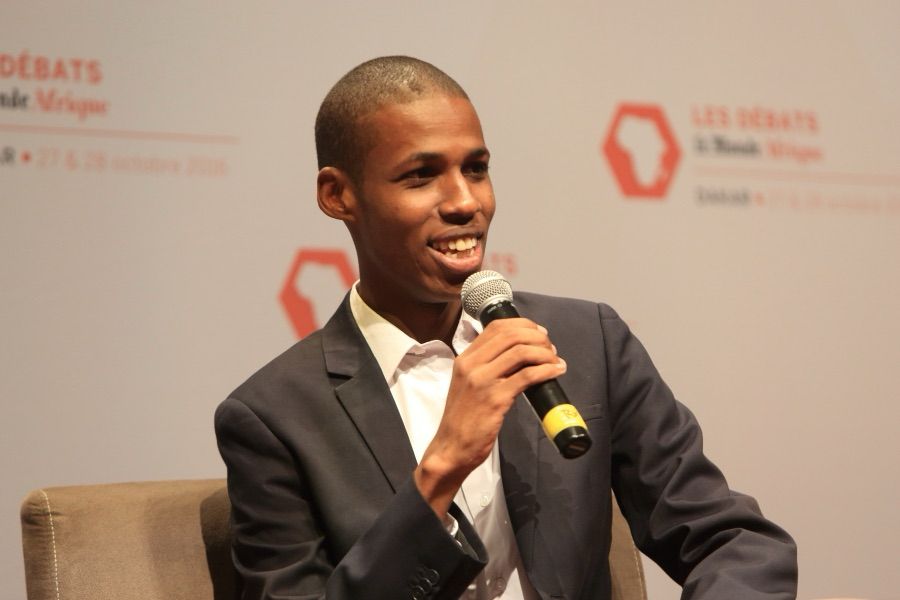
Hamidou Anne is an international consultant, political scientist and writer. A former student of the École nationale d’administration (Marie Curie Promotion), he is the author of several works, including Panser l’Afrique qui vient (Présence Africaine).
What does the report of the Court of Auditors published in Senegal on February 12 inspire you?
This report is at least curious in some aspects, especially in its form. First, it is not signed by its authors, as if they were avoiding to take responsibility for it. Second, it goes against the previous conclusions of the Court, which certified all public accounts under the Macky Sall era, thus allowing the Parliament to vote on the regulations until 2022. Moreover, during the Council of Ministers meeting on June 26, 2024, the current government itself adopted the regulation certifying the accounts for the 2023 fiscal year. Had the dissolution not occurred on September 12 last year, the Assembly would have voted for the 2023 regulation. Besides its inconsistencies, in substance, the mountain of manipulation gave birth to a mouse of disbelief. Although the report pointed out irregularities and discrepancies that need to be corrected, it did not issue any order of prosecution against anyone. The court limited itself to recommendations to improve the management of public accounts.
Yet the Prime Minister had made serious accusations about the management of the previous regime?
Ousmane Sonko is engaged in a constant campaign of disparagement of the institutions of Senegal. His grave accusations of manipulation, falsification of public accounts, and embezzlement of public funds are embarrassing for him, and then for the country. A Prime Minister who accuses his own administration of manipulating the accounts is dishonoring himself and his country. He treats civil servants as disloyal to their country; as proof of this, Mr. Sonko, by his irresponsible attitude, has handed over Senegal to the markets. As evidence, our country’s sovereign rating was downgraded by the rating agencies; the IMF has stopped cooperating with Senegal, which is now borrowing at extremely expensive rates and with very short maturities.
His accusations also put pressure on the Court of Auditors, which was thus in a double bind. Its magistrates had the choice between resigning themselves to the consequences because they had certified the accounts up to 2023 or submit to the dictates of the Prime Minister. This discomfort of the magistrates is evident in the contortions of the report, such as the swelling of the debt, with the import of that of the parapublic sector into the overall debt and the voluntary confusion regarding the properties sold to a heritage company, Sogepa. But what must be remembered after this insignificant and sterile controversy is the following: the accusations of masking, falsification and misappropriation of public funds brought by Ousmane Sonko against his own administration are unfounded. In any case, no rational mind has given him any credit for quite some time now. His Minister of the Economy judges the debt to be sustainable, contradicting the artificial political catastrophism of the head of government.
You were a diplomat. What do you make of the crisis in the Sahel?
Four countries in the ECOWAS are led by military regimes. Among them, three states have decided to secede from the ECOWAS and embark on an adventure that seems to me to be at least perilous. Human rights violations, arbitrary arrests and disappearances are multiplying in Mali and Burkina Faso in particular. In Niger, President Bazoum is still held hostage by the junta. To these acts, a complicated economic situation is added. Based on a brutal break with France, the countries of the ECOWAS are allied with Putin’s Russia and have even imported mercenaries from the Wagner group, renamed Africa Corps since the death of Evgueni Prigogine, to guarantee the security and integrity of the territory in place of their armies. Crimes are being committed without knowing exactly what the outcome of the volatile and fragile situation will be. There will come a time when anti-France slogans, pro-sovereignty rhetoric and propaganda from the regimes will no longer be enough; the youth who supported these coups will lose patience due to unemployment and precariousness. The risk of confrontation is real based on a social crisis whose seeds are gradually spreading.
What about Senegal in this crisis that you describe?
Senegal remains this island of stability in a region in turmoil and in an uncertain cycle of crises. Despite the explosive episode of violence between 2021 and 2024, Senegal has managed to produce within itself the seeds of its anchoring in peace and democracy. For four years, the Pastef embarked on the path of violent insurrection. The State upheld and defeated the insurrectional aspirations. In the name of his responsibility as a statesman, President Sall had an amnesty law passed despite opposition from his own camp. It enabled the release of Mr. Sonko and his lieutenant and the peaceful holding of the election of March 24 last year. Senegal still amazed the world by expressing its creative genius buried in the heart of this people. The transition was in accordance with our political tradition, and the victors govern while the vanquished find themselves in legal and legitimate opposition. This example of repairing the fractures to build peace and organize a free, transparent, and inclusive election forces us to rise again to all the stations where world affairs are discussed. But alas, the government, through populism but also because it fails to grasp the meaning of history, is contributing to the gradual fading of our country on the international diplomatic stage.
What do you take away from President Sall's record on international policy?
Macky Sall led two fronts over a period of twelve years. On the domestic policy front, the results regarding the structural transformation of the economy and social inclusion led to Senegal being removed from the list of the least developed countries by the United Nations. On the international front, Senegal repositioned itself to be at the heart of global issues. First, we made peace with our closest neighbors. Dakar enabled the return of democracy in Gambia and Guinea-Bissau. With Mauritania, the exploitation of the GTA/Ahmeyim gas field now links our two countries towards a horizon of peace and prosperity.
Thanks to its mandate at the head of the AU, Senegal has enabled Africa to have a seat at the G20. Through the leadership of its President, Senegal played a role in the Russian-Ukrainian crisis and enabled the opening of secure corridors for the transportation of wheat to the benefit of populations, especially in East Africa, who were at risk of famine.
I would have liked these projects, and in particular the reform of global financial governance, to be taken care of by the new regime. But apparently their model remains one of excessive verbal rhetoric regarding domestic policy and the suppression of foreign policy.
How do you analyze the state of relations with France in a period of resurgence of sovereignty in Francophone Africa?
As I often say, I have no relationship of submission or indifference to France. It is our first bilateral partner with a rate of 15% on our stock of foreign direct investments and about 300 French companies, which contribute 25% of our tax revenues. We have cooperation in all fields, materialized notably by the existence of an intergovernmental seminar whose 5th session took place in Paris in 2015.th The edition took place in December 2022. And on the historical level, we have a shared experience and figures. I am thinking of Senghor, minister under the 4th Republic.th Republic and author of the Constitution of the 5ththe 8th. Jean Collin and André Peytavin were ministers in Senegal after independence in 1960. I like to recall the little-known history of Jean-Baptiste Belley, a hero of the French Revolution. Originally from Gorée, he was deported to the Antilles and was the first black MP in the history of France, in the Convention, the constituent assembly established during the upheavals of the Revolution. François Mitterrand said «sons never cut themselves»; I am convinced of this to the point that I believe that the current turbulence is merely a phenomenon, a temporary upheaval in the great history between our two countries.
You are one of the few Senegalese intellectuals to have written several articles about the disaster in Gaza. How do you analyze the current situation?
Our humanity has disappeared in Gaza. We are witnesses to an absolute horror, where an entire population is being martyred in violation of the rules of international law and the standards of simple humanity. October 7 is an absolute tragedy. It is a despicable terrorist attack, and it is never acceptable to forget it. Hamas is a fundamentalist movement whose first victims are the Palestinians of the Gaza Strip. I never subscribe to the killing of innocent civilians, regardless of the cause that is said to be defended. But the tragedy in this part of the world precedes October 7. And to say this is to hold both ends and denounce with all our energy the horror perpetrated by Benjamin Netanyahu and his extremist government in Gaza. 45,000 people were killed under the bombs of one of the most powerful armies in the world, a majority of whom were women and children; a devastated territory in which it is impossible to build a life. But what shocks Gaza most are the words that accompanied the massacre; words of invisibility and dehumanization of the Palestinians whose very existence is denied. While it is necessary to applaud the ceasefire, one must nevertheless warn against a permanent desire to erase the Palestinians. The plan proposed by Trump is striking in this regard: the massive deportation of a population against its will is a crime against humanity. It is naturally doomed to failure, because the Gazans will not leave their homes. They know from the painful memory of the Nakba that they will not return; and above all, no one would welcome them, not Egypt or Jordan.
On this issue as well, as on others, Senegal has a history that would allow it to work towards peace and the only viable solution: that advocated by international law, namely two states coexisting in peace. But our diplomacy is deprived of its vital energy with incompetent leadership and an nonexistent foreign policy.

 French
  English
  Chinese
  Arabic