
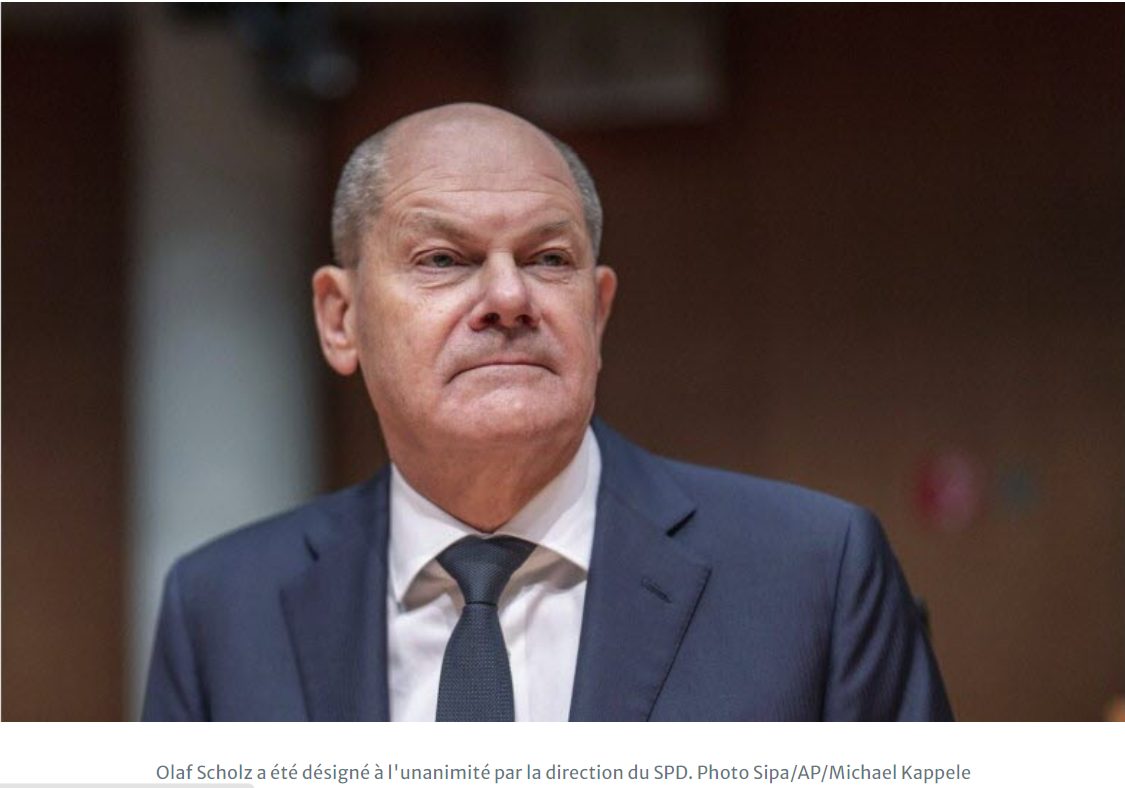
Germany is currently going through a political crisis of unprecedented magnitude.
The recent motion of no confidence adopted by the Bundestag has brought about the fall of the coalition government led by Chancellor Olaf Scholz, forcing the country to hold early general elections. This upheaval highlights deep fractures within the German political landscape, with the rise of the Alternative for Germany (AfD), a far-right party, which is causing concern not only at the national level, but also on the international stage.
A Fragile Three-Colour Coalition
The alliance formed in 2021 between the SPD, the Greens and the FDP seemed to hold out hope for ambitious reforms. However, significant differences, notably regarding economic and budgetary reforms, quickly undermined this agreement. The dismissal of the Finance Minister, Christian Lindner (FDP), in November 2024, marked a decisive turning point, thus sealing the collapse of the coalition and plunging Germany into a period of profound political uncertainty.
The Greens, for their part, have also been through notable turbulence. Last September, their leadership resigned following a series of electoral defeats. These events seriously disrupted the process of implementing essential reforms, notably those related to the energy transition and the fight against climate change, issues which were nevertheless among the coalition's stated priorities.
A Major Economic Crisis and its Political Consequences
Persistent inflation and the energy crisis, amplified by the fallout from the war in Ukraine, are fuelling growing discontent among the German population. Households are seeing their purchasing power shrink, while businesses, faced with rising energy costs, are struggling to maintain their competitiveness. This situation is becoming all the more concerning due to rising unemployment and economic stagnation, with forecast growth for 2025 standing at only 0,2 %. Industrial giants such as Volkswagen are announcing the closure of certain plants, fuelling uncertainty among workers and their families.
This climate of crisis is fuelling a deep sense of frustration with the traditional parties, thereby providing the AfD with an opportunity to harness this growing discontent. Voters, increasingly disillusioned by the leaders' inability to resolve these crises, could turn towards radical solutions, which could redefine the German political landscape at the upcoming elections.
A Motion of Censure and its Repercussions Majors
On 16 December 2024, the Bundestag adopted a motion of no confidence against Chancellor Olaf Scholz, thereby bringing an end to his government. This vote, marked by internal tensions, prompted Federal President Frank-Walter Steinmeier to call early elections, scheduled for 23 February 2025. These elections promise to be decisive, not only for Germany's future political direction, but also for the country's influence on the international stage.
Lively Debates and Increasing Polarisation
The debates preceding the motion of censure were particularly lively. A visibly bitter Olaf Scholz accused the FDP of sabotaging the coalition, declaring: «Politics is not a game». For their part, the CDU/CSU and the AfD called for a radical change in political direction, thereby intensifying polarisation within the German political landscape.
Polls Concerning for Traditional Parties
The latest polls carried out in Germany reveal a worrying trend. The CDU/CSU remains in the lead with 33 % of voting intentions, followed by the AfD, which is rising to 17 %, while the SPD is stagnating at 15 %. The Greens, meanwhile, are polling at 12 % and are trying to position themselves on key environmental and social issues.
This rise of the AfD reflects a growing fragmentation of the political landscape, thus complicating the formation of stable coalitions. It should be pointed out that, for the time being, none of the traditional German parties appear to be considering a coalition with the AfD. Nevertheless, this ascent of the AfD could exert considerable pressure within the Bundestag, altering the balance of power and impacting future political debates. Analysts fear that this evolution will intensify political tensions and heighten governmental instability. In this climate of distrust towards traditional parties, perceived as disconnected from popular concerns, the ballot could redefine political alliances and steer the future of the country.
Germany at a Historical Turning Point
The elections on 23 February 2025 will not simply redefine Germany's political future; they will also have profound repercussions on the European and global balance. The rise of populist parties, in particular the Alternative für Deutschland (AfD), represents a direct threat to European institutions. With its nationalist and at times xenophobic positions, such a party could weaken the European Union by calling into question the spirit of multilateral cooperation that forms its foundation.
This political shift could also impact the Franco-German dynamic, an essential pillar of European integration. The Franco-German axis, the historical engine of this integration, could see its relations become more complex if Germany opts for an approach more focused on its national priorities. Such a change would limit the room for compromises and essential dialogues, which are the very core of European solidarity.
In addition, a government more inclined towards nationalism could reassess its priorities, particularly regarding development aid and international cooperation. This reorientation could modulate the intensity of Germany's commitment to partner countries such as Tunisia, which traditionally benefits from strong support for its development efforts. Although bilateral relations should continue to evolve, it would be prudent to closely monitor developments in Germany's internal political situation, as this could redefine certain aspects of this engagement and significantly redirect cooperation priorities.

 French
  English
  Chinese
  Arabic