Just as Emmanuel Macron was speaking in his New Year address of «French diplomatic and military might«, Ivorian President Ouattara announced the departure of French forces from Ivory Coast, specifically the 43rd Marine Infantry Battalion, as early as January. The scaled-down arrangement that had been envisaged, featuring a stronger training focus, has completely fallen through. This decision must be viewed in the context of the upcoming presidential election in Côte d’Ivoire, at a time when a renewed Pan-African sentiment advocating for real rather than formal independence from France is widely favoured. The Élysée has probably exerted some heavy-handed pressure for the Ivorian President to give up on running for a new term. This is tit for tat, demonstrating a total loss of influence for France in one of Africa's leading countries, with the withdrawal of French troops from Senegal already having been made official. The mission entrusted to Jean-Marie Bockel on the redeployment of French forces in Africa is turning out to be a resounding fiasco. Indeed, the latter stated on 7 November 2024 that «our African partners do not wish for our departure». This practice of using special envoys to bypass the Quai d'Orsay and ministers who know nothing about Africa has been showing all its limitations for some time now, without any conclusions being drawn. Our policy towards Africa is always a step behind and we continually demonstrate a profound inability to understand and analyse the feelings of Africans.
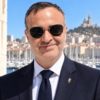
Erwan DAVOUX est Président de LMD CONSEIL, (conseil stratégique, intelligence économique, risque géopolitique, influence politique, diplomatie économique). Diplômé de l'IEP de Paris et de l'INALCO (département d'études arabes), il est directeur de la publication de geopolitics.fr. Erwan Davoux est spécialiste des relations internationales, de l'analyse géopolitique et des risques politiques, avec une expertise particulière de l'Europe, du Moyen-Orient et de l'Afrique (EMEA). Son parcours comprend des fonctions institutionnelles de haut niveau et des activités de conseil stratégique. Il intervient sur les questions de politique internationale, de risques géopolitiques, d'intelligence économique et d'affaires publiques. Il publie régulièrement des analyses consacrées aux évolutions des rapports de force internationaux, aux crises régionales et aux enjeux stratégiques contemporains.


 French
 English
 Chinese
 Arabic