
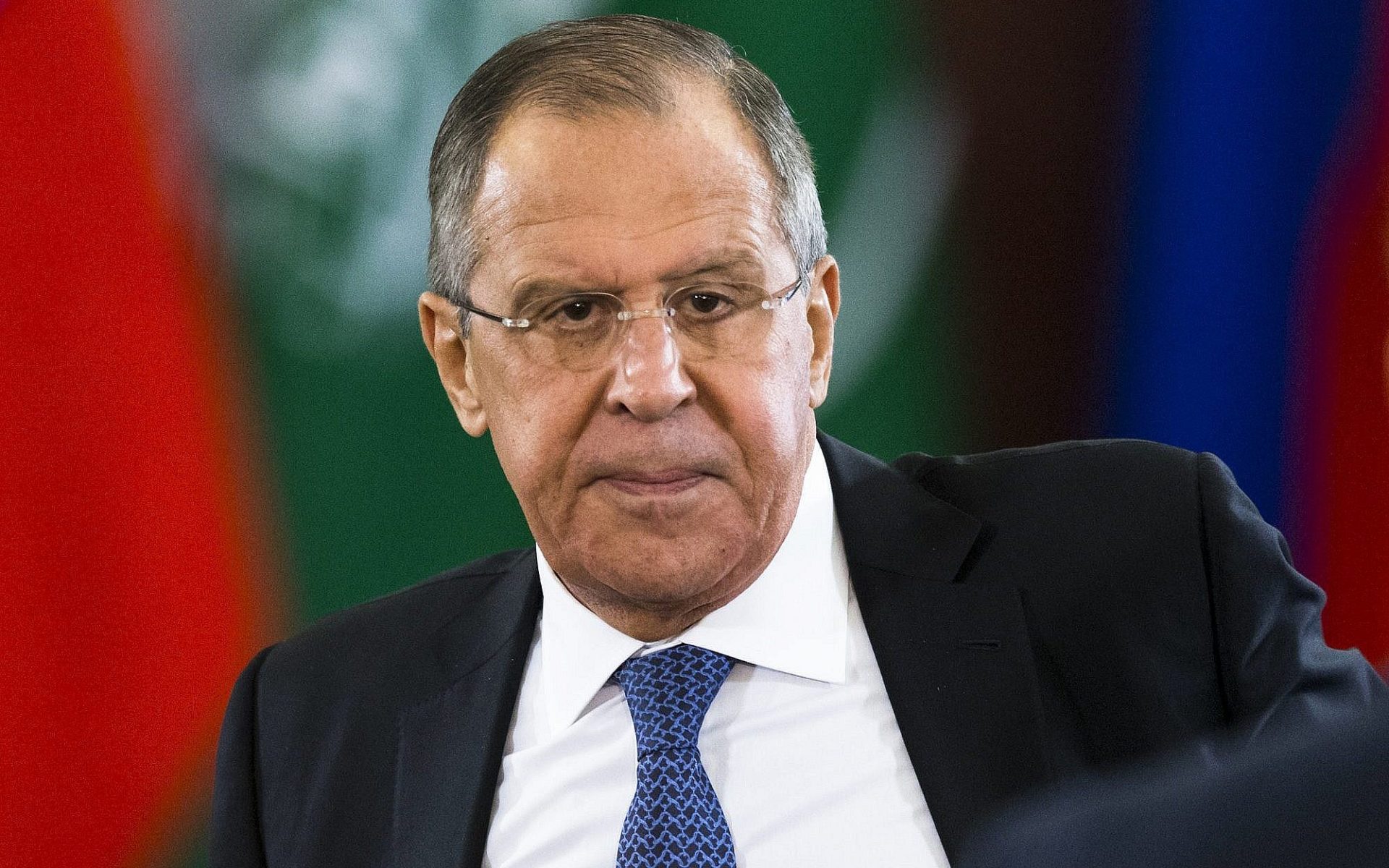
Russian Foreign Minister Sergei Lavrov was present this Thursday in Malta, where his Ukrainian counterpart was also located. This is a notable fact as it was his first visit to a European Union country since the start of the war in Ukraine in February 2022. Both men are attending a meeting of the Organization for Security and Co-operation in Europe.
A first in nearly three years for a Kremlin dignitary. Russian Foreign Minister Sergei Lavrov arrived in Malta this Thursday, 5th December, where he made his first visit to an EU country since the beginning of the bloody conflict in Ukraine, triggered on 24 February 2022.
His Ukrainian counterpart also travelled there, encouraged by the US representative Antony Blinken. However, while the US Secretary of State did attend the Organisation for Security and Co-operation in Europe (OSCE) meeting held in Ta’Qali, no meeting with Sergei Lavrov was planned.
A notable event because the Russian diplomat, hit by EU sanctions, had not crossed the borders of the European Union since a trip to Stockholm in December 2021, also for an OSCE meeting according to Russian media.
For the record, the OSCE was founded in 1975 at the inception of an easing of tensions between East and West during the Cold War. To date, the international organisation has 57 members, stretching from Turkey to Mongolia, via the United Kingdom and Canada, as well as the United States, Ukraine and Russia.
Its goal? To encourage and urge its members to coordinate on broad issues such as human rights and arms control. However, Moscow is becoming increasingly critical of the organisation, considering that the group is «moving away from its founding principles».
A Russian minister with frozen assets but free to travel internationally
At the last ministerial summit a year ago in North Macedonia, Sergei Lavrov had already accused the OSCE of becoming an «appendix of NATO and the EU». In retort, Ukraine had urged that Russia be excluded from the organisation, preferring an empty chair policy during the Skopje summit due to the presence of the head of Russian diplomacy.
Starting this Wednesday and appearing this time to favour the diplomatic route, Kyiv had declared that its Minister for Foreign Affairs, Andrii Sybiha, would take part in the discussions in Malta« who intervene at a delicate moment for the country ».
The recently elected US president, Donald Trump, has for his part promised to push for a swift agreement to be reached and for the war to be brought to an end, while leaving Kyiv scrambling to position itself before his inauguration in January.
As for Antony Blinken, for the record, en route to Malta after making his latest visit to NATO headquarters in Brussels on Tuesday, he had not met Sergei Lavrov since the G20 in New Delhi in March 2023.
Also in 2022, Poland, the OSCE host country, had refused Sergei Lavrov's attendance by banning him from its borders, which had naturally provoked the wrath of the Kremlin.
Even so, the ambient temperature on this peak remains close to freezing. Polish Foreign Minister Radoslaw Sikorski, a long-standing ally of Ukraine, stating as a preliminary remark as early as Wednesday « that there would be no discussion with the head of Russian diplomacy in Malta », while questioning « why Moscow is still allowed to be part of the OSCE ».
Not without a certain cacophony that major international organisations are starting to get us used to, and the EU in particular, the spokesperson for Malta, the host country of the summit, considered that Sergei Lavrov « was subject to an EU assets freeze, but was not subject to a travel ban and the Russian Foreign Minister had been invited in order to keep certain communication channels open »That's the end of that.
Logjams at every level within the OSCE, heading towards an announced death
As a warning as early as Wednesday, Russian Foreign Ministry spokesperson Maria Zakharova stated that Sergei Lavrov « use the event to denounce the organisation's institutional crisis »Pushing the point home« while a number of Western countries were using this platform for their own interests and the organisation had been «Ukrainianised» »Party atmosphere compromised, then.
Indeed, it is clear that the OSCE has been completely paralysed since the outbreak of hostilities between Russia and Ukraine in early 2022, with Russia regularly vetoing several major decisions requiring consensus. Thus, the posts of Secretary General and three other senior officials have remained vacant since September, due to a lack of agreement on the candidates. The outgoing Secretary General, the German Helga Maria Schmid, was appointed in December 2020 for a three-year term, but her mandate had already been extended once until September.
It would appear, however, that the ambassadors sitting on the OSCE have agreed behind the scenes on the candidacy of the Turkish diplomat Feridun Sinirlioglu to succeed him, reports AFP, but this decision still has to be approved by ministers meeting in Malta. The latter will also have to agree on the country that will chair the OSCE for the period from 2026 to 2027.
Already adding to the organisation's litany of woes, Russia had prevented Estonia, a NATO member, from holding the presidency this year, whereas in 2025 it is Finland, a new member of the Atlantic Alliance, which is expected to hold the presidency.
Lastly, it is worth remembering that the OSCE also has the statutory and diplomatic prerogative to potentially send observers to conflicts, as well as to elections worldwide! Furthermore, the latter also manages programmes aimed at combating human trafficking and guaranteeing freedom of the media. This is enough to genuinely annoy the Kremlin, and not just them.
Nevertheless, most of the OSCE's monitoring mechanisms have been hampered by the impossibility of agreeing on a viable budget since 2021!

 French
  English