
« Agrippa holds a postgraduate degree in geopolitics from the ENS. For over thirty years, he has held management positions in the service of elected officials, making him a seasoned observer of French political life and world affairs.
After looting Rome in 390 BC and besieged, without success because of a dark history of geese; what remained of its inhabitants fled to the Capitol, Brennus, The leader of the Senonian expedition, Chef de l’expédition des Sénons, agreed to lift the siege in exchange for a tribute of a thousand gold pounds. Upon discovering that the Gaulish weights were false, the Romans came to complain to Brennus who, for any answer, added his sword and his quiver to the balance, shouting «Vae Victis»[i] woe to the vanquished.
This first of many aphorisms in geopolitics has never failed over the centuries. The City-States of antiquity, no more than our modern nations, are not driven by feelings. In this and many other areas, the stronger’s interests always prevail over the weaker’s. One must take one’s side and stand on the side where the balance tilts. This is the cynical principle of the march of nations. This widely established fact does not trouble the «idealists». For them, borders are obstacles to universal love and their abolition is the solution to all problems. By rejecting a reality that does not conform to their wishes, they find refuge in their dreams populated with « Citizens of the world ». Refusing to see that only a minority of the privileged by fortune have the means to claim themselves as such....
The end of a world
In these times of major economic crisis, there has never been a greater need for self-protection. Indeed, it is within the national framework that each individual naturally seeks protection from their government. If they do not receive it, it is within this geopolitical context that the revolution will be waged to obtain it. No matter how limited they are, politicians, whether Democrats or autocrats, know this very well. If nothing improves, let us not doubt the return of the proven benefits of protectionism and national war as a means of escaping the crisis.
The economic storm that arose in 2021 in the world will not end with the resolution of the war in Ukraine, regardless of who wins. The global economic system on the verge of implosion was saved at the last moment by the states that, in doing so, nationalized the debt and shifted speculation to national budgets that have been in deficit for three decades.
The global economy revolves around the «hyperpower» of the United States; this is no secret. However, the premise that underpins this American hegemony rests on fragile foundations that could be called into question by the choices made before our eyes by the Biden Administration. If American economic vitality is affected by its reforms, the edifice crumbles and the cards are reshuffled. Where will the bulk of the capital released by the globalization of trade be invested?
This economic issue, crucial to the future of our debt-ridden societies, will directly dictate the future of world peace. Strategic choices are emerging; let us try to identify them.
Towards a new world order?
Since the failure of the continental blockade and that of Napoleon Bonaparte, the maritime powers dominate the world. Carthage defeated Rome, the’England, and then his successor United States, They are the sponsors of a globalized economy through the ocean links.
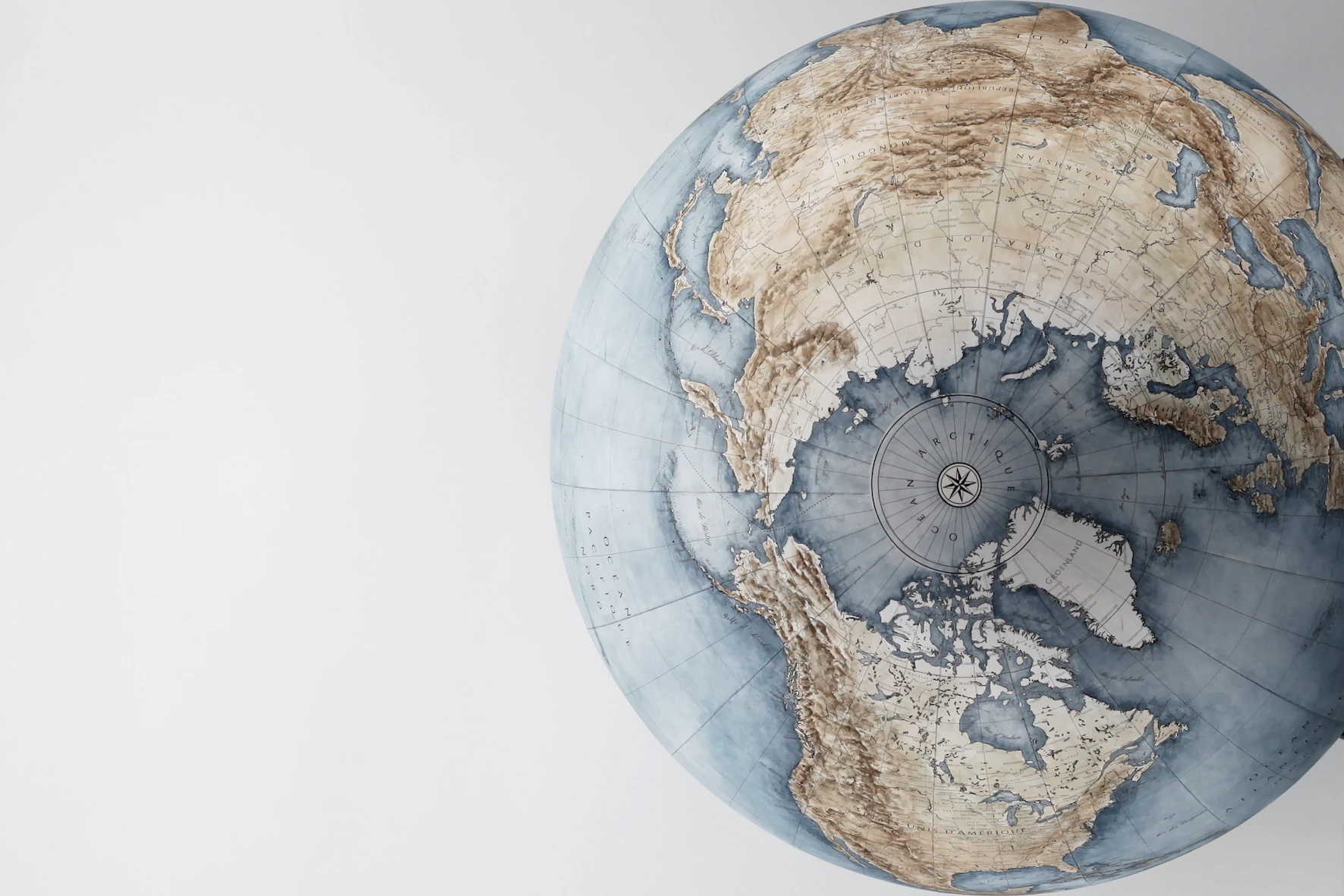
At the end of the 19th century, when the British power was at its peak, Halford Mackinder, The founder of the Oxford School of Geography and the London School of Economics questions the permanence of this fact. He establishes, in two stages (1904 and 1919), his theory that the history of Europe merges with that of Asia. This is where the great migrations begin that precipitate the end of Antiquity in the West. Forces powerful enough to upset the established order, but not strong enough to leave only chaos and ruin.’Europe, Like China, it assimilates its conquerors, then rebuilds itself, and eventually dominates the world by freeing itself, by sea, from the constraints that weigh on its trade with the East. It thus precipitates the decline of the Arab-Muslim sphere by circumventing its monopoly on land connections. After Waterloo, the’England dominates the’Europe and by so much the World, because it rules over the oceans.
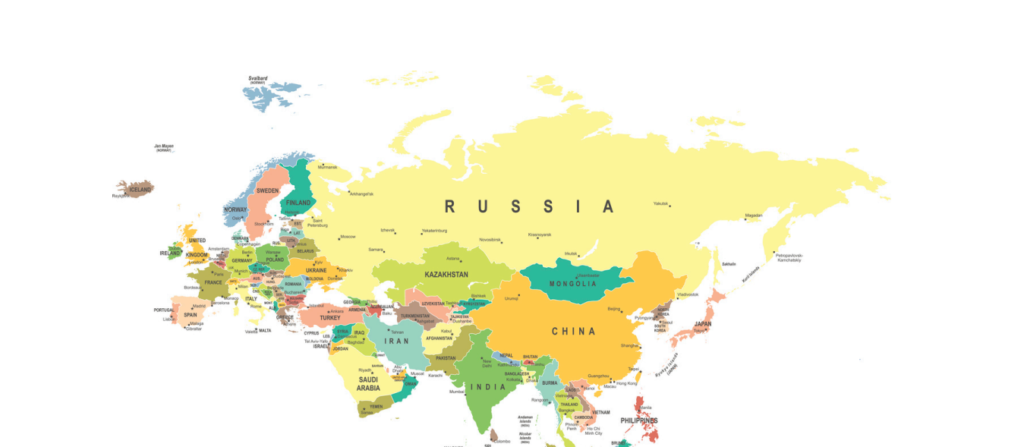
At the beginning of the 20th century, this device, reinforced by the rise of’America, is being called into question by technological and political progress. The assertion of the Russia This changes the landscape. The geopolitical heart of this continental body is stabilized under Russian leadership. The vast steppes of the Empire are inaccessible by sea. This is the «Heartland» of the supercontinent that stretches from Eastern Europe to the Kazakh steppes, passing through the vast Russian plains. This concept will be «popularized» by German geopolitics under the term «Hinterland.».
Who controls this region, controls everything.« The world island », which controls the Isle of the World, controls the world. It is the revenge of the continental people on the sailors; it is the nightmare of the’England. All the British and then American energy will be deployed so that no one extends their sovereignty over this «Heartland», so that the’Germany does not ally with Russia. France In this Anglo-Saxon strategy, he will play the role of the «useful idiot», competing with the Prussian to divert the attention from the real enemy. Russia of his destiny as a continental pivot.
If Paris is the new Rome, the two new Carthage, London and Washington, have joined forces, so far with success, to prevent the new Constantinople (Moscow) from reuniting with the Western Empire over a pacified Germany. The twentieth century will never see the formation of the axis feared by Mackinder: Paris, Berlin, Moscow, the maritime powers have watched over it.
The return of the Isle of the World
Yet, nothing is immutable and the preludes of the new millennium bring about a new reality. The imbalances caused to this «Pandee» by the great invasions that led to European domination are coming to an end. The whole situation is stabilizing. The fall of communism, the renaissance of the traditional Asian powers that are India and China, give tangible reality to the Island of the World and a new youth to the vision of Mackinder. It must be admitted that, like geopolitics as a whole, it had suffered from Cold War. Meanwhile, thanks to the political suicide that was the «European Civil War» from 1914 to 1945, an even more distant periphery has taken over from the center.’England to thwart this movement.
Neither the British monarchy, nor the superpower of America, can be satisfied with this revival of the Isle of Monde. It rightly sees in its possible emergence a threat to its hegemony. Its geographically eccentric position mechanically relegates it to the margins of the new ensemble. The raison d’être of a maritime power is to attract wealth to itself. If the need for the ocean is no longer there, it no longer needs it. If economic dynamism deserts Uncle Sam’s country, there is every reason to believe that investment will turn away from it to focus on Europe and the «Heartland,» which may be in the 21st century.e and in the new Pangée, what the «Far West» was to the United States as an economic engine at the end of the 19th centurye. The analogy is relevant as this geographical area is as vast, sparsely populated and well endowed with natural resources as its American counterpart.
If any country has very well integrated Mackinder’s philosophy and everything it entails, it is China. To ensure its development and hegemony, the Han nation needs to get rid of American domination. The Silk Road, which has been talked about for 15 years and which Beijing is deploying with obstinacy, is nothing more than the direct connection of the Far East to Europe without passing through the sea. The rapprochement between Russia and China, particularly visible since the war in Ukraine, is a consequence of it.
The occurrence of a major economic crisis in a period of such significant rebalancing of global balances is no coincidence. The emergence of European hyperpower starting in the 16th centurye The century was spent on the gold of the Americas to the detriment of other civilizations. The return to balance is being achieved through the resurgence of the ancient powers, based on the debt of the United States. It is rare that such upheavals do not lead to bloody explanations between the protagonists.
We still have to analyze the forces at play and choose our camp wisely.
Identifying the enemy
Since Hiroshima, this question of the enemy is crucial. The nuclear powers can no longer confront each other directly because of the « Mutual destruction ensured ». Deterrence rests on the ability to be able to deliver destruction to the enemy with certainty. It is therefore necessary to distinguish between countries with a credible weapon and those that merely possess the weapon. The five permanent members of the Security Council, Israel, the’India and the Pakistan They have this possibility. The question arises for the next candidate for the club that is’Iran.
In reality, in a world undergoing profound change, direct confrontation between rising powers and dominant nations will probably not take place directly, but through intermediaries. As in the Cold War era, the game will be played at a distance and on foreign soil. The question remains of where.
Without repeating the classification of civilizations established by Samuel Huntington in his seminal work[ii], It is necessary to acknowledge the indispensable position of the Arab-Muslim sphere in this new context.
It seems inappropriate to speak of a homogeneous bloc in this context, since religion is the only link in the disparate aggregate of peoples and cultures that makes up this sphere. Apart from a very imperfect Ottoman Empire in this regard, there has never been a firmly established political unity.
Driven by a desire for expansion that it does not have the concrete means to achieve, this bloc that the Americans call the «Greater Middle East» is THE problem that threatens the stability of the new Pangaea. To unite the continents by land, China and the’India at the’Europe, The pacification of these areas is proving necessary. It is striking to note that these three civilizations are simultaneously prey to the same attacks by religious fanatics. These three powers have, correspondingly, identical vital needs for energy supply.
An unstable Greater Middle East presents the double drawback of hindering the unification of the world island, by refusing to dilute into the new entity and to possess the energy resources necessary for its prosperity. I add that, if the Pakistan It is undeniably a nuclear power; serious doubts remain about its existence without the support of the Chinese. All this therefore contributes to making this area, which extends from the Morocco at Pakistan, the borders of the deserts of’Arabia at Caucase Russian and au Xinjiang China is the place where conflicts are expressed. In fact, this movement began under the impetus of United States Those who feel vaguely that their future is at stake here. The Afghan conflicts, so necessary, and the Iraq war, so stupid, allow instability to be maintained, to the great chagrin of the Russians and the Chinese.
We have seen that the Americans have no interest in the emergence of the World Island. By an interesting reversal of circumstances, it might even be that one day not too distant from now, the «great Satan» will become the best ally of the Islamist movement, as their goals could quickly converge.
How did the France Should it position itself in this new part of its survival game? In what way is it still strategic and can it make a difference? These questions will be developed in the second part of this article.
[i] Episode narrated by Tite-Live Roman History V- 48
[ii] Samuel P. Huntington The Clash of Civilizations and the Remaking of World Order – Simon & Schulster 1996 / abusively reduced, in my opinion, to a mere simplifying factor Confrontation of civilizations in its French translation – Odile Jacob 1997 and reissue in 2007.

 French
  English
  Chinese
  Arabic