
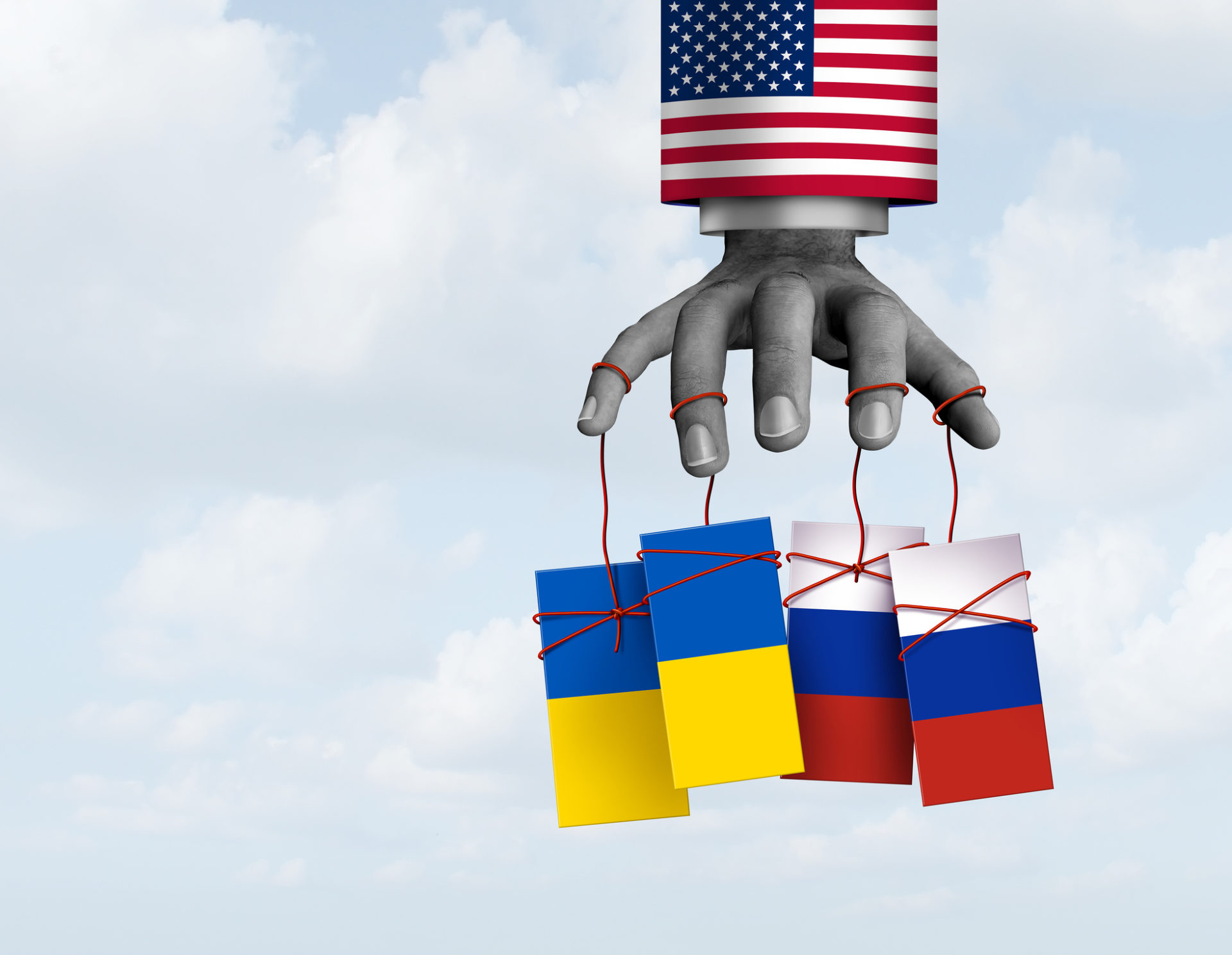
Four years and two months. That is the duration of the war in Ukraine as we write. Four years of Ukrainian sacrifices, four years of Western sanctions, four years of rhetoric about Russia's inevitable defeat. And yet, Putin is still in the Kremlin, the front lines have barely moved for months, the Geneva negotiations of February 2026 have produced nothing, and the 500 Russian drones and missiles that regularly rain down on Ukrainian cities serve as a reminder that this war is not about to end.
Let us therefore ask the question that Western leaders refuse to articulate publicly: what if no one could win this war? What if we had already entered, without admitting it, into a very long-term conflict whose consequences Europeans will have to live with for a generation?
What the facts say: a war that is freezing up
As of 27 April 2026, the military situation is as follows: northern front, no progress; eastern front, advancement of Ukrainian forces in the Lyman sectors; southern front, Russian advancement in the Huliaipole sector. Advances of a few kilometres, paid for in thousands of lives. The modest gains of 116km2 by the Ukrainian army are presented as a triumph. More symbolic in nature than capable of changing the course of events.
It is the reality of a war of position which is increasingly resembling, with technological modernisation, the great battles of attrition of the First World War.
The central strategic question is: who is wearing themselves out the fastest? An honest analysis yields a disturbing result: both. Both Ukraine and Russia are beginning to be drained of life. The Ukrainians will not retake their territory. The Russians will not advance. This is the observation of a balance of fatigue, not a balance of strength. And that balance is unstable: it only takes for one of the two sides to receive decisive reinforcement in men, munitions, or technology for the scales to tip.
Yet here is the real geopolitical problem: certain analysts are asking whether it is in the Americans' interest to prolong the conflict in order to wear Russia down and keep their hands free on the Chinese front. If that is the case — and the signals are ambiguous but real — then the United States structurally has no interest in a swift peace, even if it negotiates one on the surface. That would be a state lie by the world's leading power towards its European allies. A lie that Europe would do well to face squarely.
The Geneva negotiations: the grand theatre of nothingness
On 17 and 18 February 2026, Russians and Ukrainians met in Geneva under US mediation. Following the discussions, Zelensky reported that ambitions between the two sides remained very different, accusing Russia of «dragging out» the negotiations. Meanwhile, Trump's special envoy, Steve Witkoff, praised the «significant progress» achieved. Yet, despite several rounds of talks, no resolution to the conflict has been found.
Reading Russian negotiating positions with attention is illuminating. What Moscow is demanding is not peace. It is a Ukrainian capitulation disguised as a diplomatic agreement. Russia is demanding that Ukraine no longer receive foreign military aid or intelligence, that it end mobilisation and martial law, that it renounce any demand for reparations, that it organise elections 100 days after the lifting of martial law, that Russian become an official language on an equal footing with Ukrainian, and that the Moscow Patriarchate be reinstated over the Ukrainian Orthodox Church.
Analyse this list coldly: these are the conditions of a state that does not recognise the political legitimacy of its adversary. Putin does not want to make peace with Ukraine as a sovereign state. He wants to create the conditions for a politically vassalised Ukraine, without any foreign army on its soil, without Western aid, with an official Russian language, and an Orthodox Church brought back under Moscow's control. It is the destruction of Ukrainian national identity using the instruments of international law.
These negotiations will not succeed as long as Putin remains in power on the basis he is setting out today. Not out of idealism or emotional support for Ukraine, but through rational analysis: no Ukrainian government can politically survive the signing of such an agreement. Accepting Russian conditions means signing the death warrant of Ukrainian democracy. Zelenskyy knows it. The West knows it too. And yet, the pressure for a deal is growing.
Trump and Ukraine: the most dangerous ally
The question of American reliability is central and deserves a clear-eyed analysis. The Trump administration is simultaneously pursuing two contradictory policies which, taken together, objectively serve Russian interests in the short term.
On the one hand, Trump is maintaining rhetorical pressure on Moscow, demanding a ceasefire, and letting his envoys take part in coalition summits. On the other hand, actions speak differently: lifting sanctions on Russian oil in the name of American pump-price stability, gradually withdrawing intelligence leadership in favour of Europe, and granting sanctions waivers that allow Moscow to rebuild financial resources. The European Council, in its conclusions of 19 March 2026, «urges all countries to cease immediately all aid to Russia in its war of aggression, whether direct or indirect». This text officially targets third countries. Unofficially, everyone around the table is also thinking of the American waivers.
The question Europeans refuse to ask Washington publicly: are you really with us, or are you managing your own disengagement while making it cost as little as possible for your domestic public opinion? The honest answer, judging by actions, is that the Trump administration is arbitrating between its internal electoral interests and its Atlantic commitments. And when the two come into conflict, the Atlantic commitments lose.
Putin is playing a tune that Western democracies find hard to counter structurally: that of the long term versus the short electoral term. His strategy is based on a cold calculation: democratic the West changes government every four or five years. Political priorities change. Fatigue over supporting Ukraine is growing among the public. Military budgets are creating social tensions.
And what about him? He has locked down his regime, converted his economy into a wartime economy, and can sustain the military effort for a duration that democracies struggle to match. The coalition of the willing has announced its intention to step up economic pressure on Russia, notably through additional sanctions and by targeting the Russian shadow fleet, oil-trading networks, and the Russian military-industrial complex. These measures are real and partially effective. But Russia has had four years to adapt to them.
What strengthens Putin is also the axis he has built with his sanctions-evasion partners. The European Council of 19 March 2026 strongly condemns the deployment of North Korean military forces in the war against Ukraine, as well as the military support that Iran, Belarus and the DPRK continue to provide. North Korean soldiers are fighting in Ukraine on behalf of Russia. This is a matter of extraordinary gravity that Western public opinion has accepted with a disturbing normalisation. Kim Jong-un is committing his troops to a European war. Global geopolitics has thus restructured into two blocs which, unlike during the Cold War, lack doctrinal stability or clearly defined red lines.
France was strategically right on the essentials. In 2024, Macron proposed a potential deployment of French troops, which caused a European outcry; it was actually a lucid anticipation of Europe's need to move beyond the logic of indirect support in order to take on the role of a directly engaged power. The Paris summit on 6th January 2026, co-chaired by Macron with Starmer and Merz, formalised unprecedented unity and the establishment of a multinational reassurance force for Ukraine.
But France finds itself in the uncomfortable position of leading a movement that financially surpasses it. Germany's contributions to the military aid provided to Ukraine vastly exceed those of France. Paris leads the coalition politically and diplomatically, but is no longer its primary military financier. It is leadership on credit, built on Macron's moral authority and rhetorical capability, but fragile as soon as the reality of financial and military metrics takes over.
The real strategic question for France is this: as the 2027 presidential election approaches, can it maintain its commitment to Ukraine at its current level? If Édouard Philippe is elected, which is plausible, his Gaullist philosophy of power and his declared military support for Ukraine suggest that continuity will be ensured. If the left wins with a candidate from the Mélenchon camp, support for Ukraine would be radically called into question, with potentially disastrous geopolitical consequences for Kyiv. The French presidential election of 2027 is thus, paradoxically, a geopolitical issue for the whole of Eastern Europe.
Scenarios and outlook over a 24-36 month horizon?
Scenario 1 - The Korean freeze (probability: 45 %): The lines freeze in their current positions. A ceasefire is negotiated without a peace agreement. Ukraine does not formally join NATO but receives bilateral guarantees. Russia keeps the occupied territories. This scenario is the most likely because it is the only one that is politically bearable for all parties in the short term, including an exhausted Ukraine. It is also the most dangerous in the long term: it validates the principle that military aggression can pay, and it leaves Putin free to resume the offensive in 5 or 10 years once he has rebuilt his forces. This is the scenario the West will accept while telling itself it has «won» because Russia did not achieve all its objectives.
Scenario 2 — Uncontrolled escalation (probability: 25 %): A more brutal US withdrawal than expected, a large-scale Russian offensive, and a Europe forced to choose between directly committing its forces or accepting Ukrainian defeat. This scenario, which no one wants to name, is nevertheless real. It assumes a break in the Western support chain—not unlikely with Trump—and Russia taking advantage of this to try and force a military decision before European defence becomes operational.
Europe must face reality
Peace is not for tomorrow. It is perhaps not for the day after tomorrow. What Europe, and France in particular, must accept is that the post-1991 world—that of the end of history and the peace dividend—is definitively over. We have entered an era of great power competition where borders are defended by force of arms, where security guarantees must be credible rather than merely rhetorical, and where the military decline of a democracy is an invitation to aggression.
France, in this context, has two options. Either it fully assumes its function as Europe's structuring nuclear power, and it pays the price—serious rearmament, painful budgetary trade-offs, and strategic continuity beyond political alternations. Or it continues to play a role of declarative leadership without having the actual means to do so, and it sees its influence diminish to the benefit of a Germany that is quietly building its own power.
Macron has made the right diagnosis: «We must prepare ourselves for a scenario where we have to act totally alone for ourselves. That is called the end of geopolitical minority status.» That is the right formulation. It remains to be seen whether France, after 2027, will have the means, the will and the cohesion to embody it. History will judge.

 French
  English
  Chinese
  Arabic