
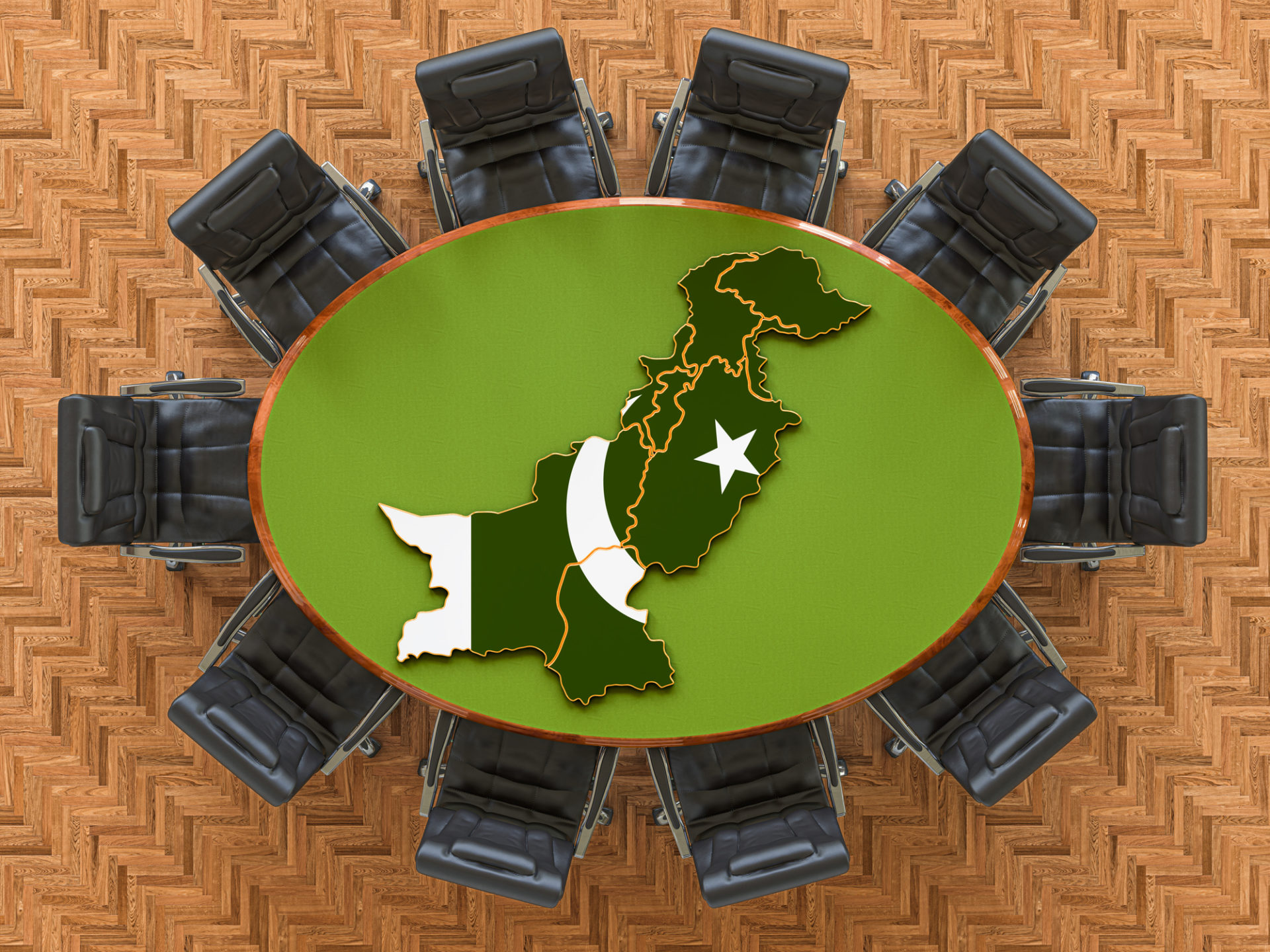
A fragile state at the heart of all tensions
There is something almost paradoxical about the diplomatic sequence playing out in this month of April 2026. The head of the Pakistani army, Field Marshal Asim Munir, is in Tehran to hand-deliver an American message to the Iranian leadership and prepare a new round of negotiations, whilst his Prime Minister, Shehbaz Sharif, is simultaneously on a tour of Gulf capitals. Pakistan is conducting a genuine diplomatic offensive — a country whose economy survives on IMF life support, whose Baloch and tribal provinces are ablaze with chronic violence, and whose political life has been paralyzed for years by the arm-wrestle between the military establishment and an imprisoned former Prime Minister.
Pakistan is emerging as an unexpected mediator at the heart of Middle Eastern tensions, with the White House designating it as «the only» channel for US-Iranian negotiations. However, Islamabad’s meteoric rise hides vulnerabilities: opportunistic alliances, an embryonic Sunni axis and a reliance on two figures, Asim Munir and Donald Trump. It is precisely this paradox that deserves to be analysed without complacency.
Default mediator: real strengths, limited successes
To understand why Washington turned to Islamabad rather than Ankara, Doha or Cairo, one must first measure what Pakistan offers that the others cannot. Its geographical position is of strategic rarity: a shared border with Iran to the west, depth towards Central Asia to the north, and a corridor towards the Arabian Sea and the Gulf to the south. Added to this is nuclear weight — Pakistan is the only Islamic power to possess the atomic bomb — and a population of 240 million that makes it an actor impossible to ignore.
Above all, Pakistan simultaneously maintains functional relations with actors who detest or fight one another: Tehran and Riyadh, Washington and Beijing. This relational multilinearity, which neither India nor Turkey can replicate identically, is precisely what makes it valuable as a channel of communication. Washington sees in Islamabad a discreet route to Tehran, a potential role in the Middle East, and a subtle counterweight to Chinese influence in the region. The comparative weakening of India in this geopolitical arc — the result of Modi's growing isolation in the Arab-Muslim world following the military confrontation of May 2025 — has furthermore freed up space for Pakistan to occupy a position that New Delhi implicitly claimed.
Islamabad has gradually established itself as a key diplomatic conduit
Islamabad is relaying messages between Tehran and Washington to keep open lines of communication that both capitals refused to handle publicly. Sources close to the Pakistani mediation are optimistic about a possible agreement on the Iranian nuclear dossier, even if caution remains the order of the day. The collateral benefits for Islamabad are real: increased pressure on Kabul, partial neutralisation of the Afghan front, and above all, unprecedented international visibility not seen for decades.
Yet the limits must be named without dodging them. The first round of talks held in Islamabad ended without agreement, and the US-Iranian truce remains precarious. Pakistani mediation may be being instrumentalised: Washington is using Islamabad as a post box without granting it formal guarantor status. And above all, there is a blind spot that diplomatic enthusiasm tends to mask: a state's mediating rhetoric coexists with the maintenance on its soil of extremist networks that its own forces fight intermittently. Pakistan presents itself as a regional firefighter.
The Sunni axis: a signal of intent, not an established architecture
While Pakistani mediation is the most visible event of 2026, the structurally most important event of the previous year is undoubtedly the pact signed in Riyadh on 17 September 2025. The Strategic Mutual Defence Agreement was signed at the Al-Yamamah Palace by Crown Prince Mohammed bin Salman and Prime Minister Shehbaz Sharif, following years of discussions and against a backdrop of regional upheaval.
The pact commits both states to treat any aggression against one as an aggression against the other, formalising a long-standing security partnership and signalling a strategic diversification by Gulf states away from exclusive dependence on the United States.
The logic of both parties is readable. For Riyadh, the signing of the pact reflects a significant shift: the kingdom, shaken by Israeli strikes on Qatar, appears more willing to treat Pakistan as a partner rather than a client state. What Saudi Arabia is buying is combat-tested conventional military capability — the May 2025 operations against India demonstrated the sophistication of the Pakistani army — and a strategic deterrence whose very ambiguity constitutes a value. The ambiguity surrounding the nuclear dimension of the agreement generates its own form of deterrence, potentially useful for both parties in the face of their current and future adversaries. For Islamabad, the benefit is immediate and concrete: Riyadh is set to become Pakistan's largest external financier for the 2025-2026 fiscal year, with over six billion dollars in loans and deposits.
Around this bilateral base, an enlargement dynamic is underway. Meetings involving Egypt and Turkey were held in Islamabad in early 2026, fuelling speculation about an emerging «Sunni NATO». It is important here to be analytically rigorous: this phrase is catchy, but it goes too far, too fast. Turkey is a member of the real NATO, maintains ambivalent relations with Israel, and its historical rivalry with Riyadh for the leadership of the Sunni world has not disappeared. Egypt remains structurally dependent on American funding and practises chronic strategic caution. What these meetings are producing is less an institution than a pointwise convergence of interests possible anti-Iranian coordination, joint signal on traffic in the Red Sea and the Strait of Hormuz, collective pressure on Tel Aviv, which is monitoring this axis with growing attention.
China is playing an often underestimated moderating role here. Beijing desires neither a break with Tehran — which supplies it with oil and a foothold in the Iranian land route — nor the marginalisation of Islamabad, its partner in the China-Pakistan Economic Corridor (CPEC). This dual constraint is pushing Beijing to discretely exert pressure on all actors to keep the escalation contained, which paradoxically limits Pakistan's freedom of manoeuvre in building a too openly anti-Iranian axis.
Asim Munir: architect or instrument?
Understanding Pakistani diplomacy for 2025-2026 inevitably means understanding one man. Asim Munir is not an ordinary army chief. Analysts consider that he has driven Pakistan's geopolitical resurgence over the past year, behaving more like a soldier-diplomat than a mere military commander. His rise has been meteoric: former head of military intelligence, promoted to field marshal under controversial circumstances, he has established himself as Washington's direct interlocutor in a way unprecedented in the country's recent history.
The relationship with Trump is documented and spectacular. Trump has publicly praised Munir on at least ten occasions since June 2025. The most striking episode occurred in October, at the Sharm el-Sheikh Peace Summit, when Trump referred to him as «my favourite marshal» in front of an audience of world leaders. In June 2025, Trump had already hosted Munir for a White House lunch — the first time an American president had received a Pakistani military chief unaccompanied by a head of government, a gesture laden with protocol significance. The areas of convergence are concrete: counter-terrorism — notably including the capture of a mastermind of the Kabul airport bombing credited to Pakistani cooperation —, access to rare earths and the crypto-economy, and Afghan stabilisation.
What Munir takes away from this relationship goes beyond the diplomatic framework. His international stature strengthens his domestic legitimacy and protects the military institution against civilian pressures — with the Imran Khan issue in the background never very far away. An army chief received at the White House is more difficult to challenge at home. But an essential analytical limit must be posed here: some analysts warn that this relationship must be seen as the product of Trump's personal position, and not of an institutional policy. Pakistani diplomacy remains fundamentally a general staff diplomacy, not a state one. Its institutional durability is therefore precarious by design. If the Afghan, Iranian and counter-terrorism theatres stabilise in 2026, Munir will no longer appear quite as frequently in the meeting rooms of Washington and CENTCOM. Utility governs everything — this is both the strength and the fragility of the reset.
What success masks: structural challenges
Pakistan's tactical brilliance in 2025-2026 must not obscure its internal contradictions, which are profound and potentially destabilising.
The first is political. The «reset» with Trump is a military elite policy, not a national consensus. Anti-American sentiment remains strong in Pakistani society, which has not forgotten decades of instrumental relations with Washington. The Shia minority—between 15 and 20 % of the population—experiences any rapprochement with an implicitly anti-Iranian coalition as a direct threat. And the Baloch issue, never resolved, is festering precisely in the border areas with Iran, where Islamabad is acting as mediator. A state that negotiates regional peace cannot indefinitely ignore its own internal fault lines.
The second constraint is economic, and it is overwhelming. Pakistan relies 100% on three financial giants: Saudi Arabia in Riyadh, which is set to become its main external financial backer with massive loans and investments; the United States via the IMF, which grants emergency loans to avert bankruptcy; and China via the CPEC (China-Pakistan Economic Corridor), a 62 billion dollar megaproject funded by Beijing to build roads, ports and power plants, which is nevertheless heavily indebting Islamabad.
Result: Pakistan is walking on eggshells. It cannot afford to fall out with all three of these donors at the same time, especially when their interests conflict – Riyadh fears Iran, Washington wants regional leverage, Beijing seeks stability for its Belt and Road routes. This triple dependency completely restricts its freedom of action in US-Iranian mediation.
The third uncertainty is external, and it has a name: Trump. Analysts warn against viewing this moment as a lasting reset, given that the relationship relies on a «personal relationship» rather than solid institutional foundations. A US president who changes priorities overnight, or who decides that Modi is ultimately more useful than Munir, can undo in a few tweets what months of diplomacy have built.
Sources close to the negotiations warn that there are detractors on all sides, and that the agreement remains hanging by a delicate balance.
The scenarios that are opening up reflect this ambivalence. If the US-Iranian truce holds and leads to an agreement, Pakistan will consolidate its status as a modest yet recognised regional pivotal power — a genuine diplomatic victory for a country long considered a problem rather than a solution. But if escalation resumes, if the Strait of Hormuz becomes the theatre of a direct confrontation, if Trump performs a U-turn or if Munir loses his footing domestically, the mediator stance will collapse — exposing Islamabad to cross-retaliation from actors it will have irritated without having satisfied them.
The tightrope walker and their limits
The Pakistan of 2026 is achieving something remarkable: temporarily transforming its structural weaknesses into tactical levers. Its dependence on Riyadh makes it a credible Sunni interlocutor. Its border with Iran makes it an indispensable channel. Its history with Washington — alternating between ruptures and reconciliations — gives it an expertise in transactional relationships that few states master as well. Asim Munir has skillfully and undeniably personalised and accelerated this trajectory.
However, the tightrope walker is not an architect. Pakistani diplomacy remains, for the most part, reactive rather than structuring. It capitalises on the crises of others rather than imposing its own agenda. And it relies on one man, a personal relationship and a set of circumstances — three variables that are by definition fleeting.
In a Middle East that is reshaping itself under Trump 2.0 along the lines of middle powers rather than rigid grand alliances, the Pakistani model — fragile yet agile, constrained yet creative — could well foreshadow other regional trajectories. But the history of this region is also that of tightrope walkers who have fallen for failing to put a foot on the ground in good time.

 French
  English
  Chinese
  Arabic