
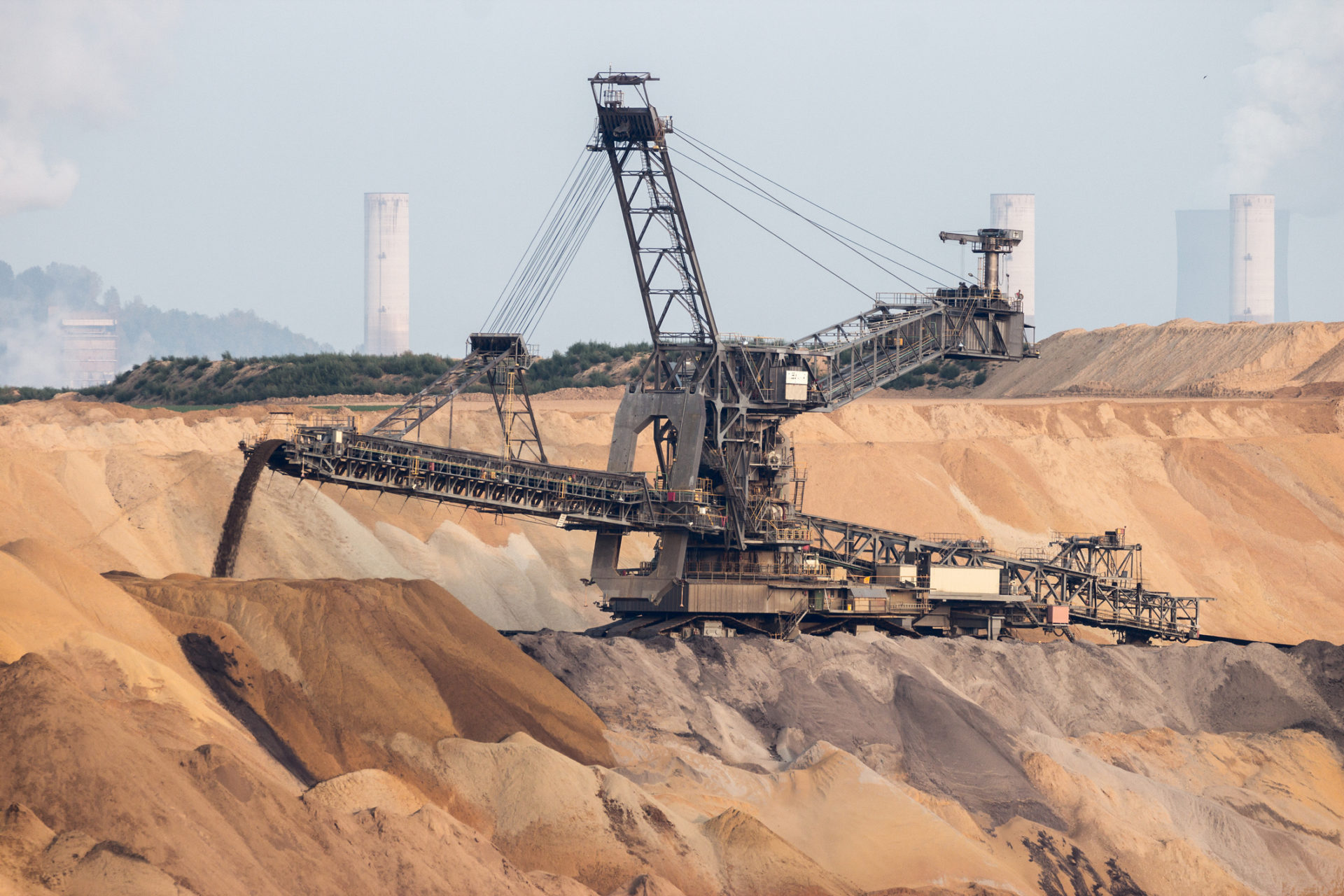
Expelled like an outcast from Niger, the country where she had retreated to pursue the anti-jihadist struggle, France not only lost a political ally. It was also deprived of an important source of one of the most critical metals, uranium. In general, its forced expulsion from Africa or the weakening of its ties with other African states has a negative impact on the frantic race for critical or strategic metals.
Critical metals indispensable to the proper functioning of any high-value-added economy
What are you talking about? Critical metals are chemical elements (uranium, lithium, nickel, cobalt, tantalum, copper, etc.), used in small quantities in the high-tech industry, for which the industrial risks associated with a supply deficit are high and for which there is no possible substitute. These are key elements of the ecological transition (batteries, electric motors, etc.), the supply of which will become increasingly strategic for the French economy of the future.
Depending on the specific reserves of each country, the critical metals are not always the same. Thus, the European Union has compiled a list of 31 rare metals that it has designated as «strategic.».
A serious risk of shortages at the European and French level
Generally speaking, Europeans are lagging behind: mining production is increasing on all continents, except in Europe. «The major players in mining are often Chinese and rarely European,» recalls Didier Zimmermann, Director of Business Development and Fundraising at EIT Raw Materials.
The risk of a shortage in the supply of these precious metals is real and could paralyze all high-value-added sectors of the economy. To guard against this risk, France launched a vast plan in late 2021 called «France 2030» to deploy production and recycling projects for these materials on the national territory and thus ensure the resilience of the supply chains of the French industry in critical metals.
Nevertheless, France remains and will remain highly dependent on a few countries for its international supplies. And uranium holds a major place in the equation.
For France, Uranium is fundamental
Indeed, France’s most certain comparative advantage over other European countries is the existence of its nuclear sector, which ensures it some energy independence. Germany, for example, continues to pay the price for Angela Merkel’s abrupt decision to phase out nuclear power in March 2011 without any consultation. Perhaps the Chancellor’s main mistake during her long reign.
However, to supply and preserve its nuclear fuel, France needs 8000 to 9000 tons of natural uranium per year, whereas it has not extracted any uranium from its soil since 2001.
France’s imports of uranium came from four main countries: Kazakhstan (about 27%), Niger (about 20%), Uzbekistan (about 19%), and Namibia (about 15%). Thus, 80% of the extraction comes from 4 countries. The supply of uranium is therefore extremely concentrated. With Niger gone, France must turn to new sources of supply. There is no need to be an expert to realize that the remaining three countries are not in the French sphere of influence but in the Russian one.
What are the avenues for diversification? Mongolia as a new Eldorado or a mirage?
It is in this context that the sudden interest of French diplomacy in Mongolia must be placed.
Indeed, the very close cross-visits of the President of the French Republic to Mongolia in May 2023, and a state visit by Mongolian President U. Khurelsukh in October 2023 in France testify to the growing interest in this country.
Orano signed a protocol of agreement for the development and commissioning of the Zuuvch-Ovoo uranium mine in Mongolia at the Palais de l’Elysée. Similarly, during the Mongolian president’s state visit to France, the Bureau des Recherches Géologiques et Minières (BRMG) signed a partnership agreement with the Mongolian geological service, the National Geological Service (NGS). This agreement is intended to enable the construction of various projects of common interest that will allow Mongolia to better understand and exploit its resources of critical metals. A first satellite prospecting project for lithium has also been signed.
But is it a reliable partner?
The geopolitical risk must be taken more into account
Mongolia is a country torn between China and Russia. Its dependence on both great powers is total, and what it concedes to one, it also concedes to the other. Its exports go to 89% to China. The country hosted Vladimir Putin in great pomp last September, while the Russian President is the subject of an international criminal court warrant.
Is it in light of these facts that the recent legislative turmoil must be analyzed? A draft amendment to the Minerals Act could lead to the expropriation, in fact, of mining assets held in Mongolia by foreign companies. The text prohibits any entity from holding more than % 34 shares of a company operating a strategic mineral deposit. Furthermore, any holder of a mining license would be subject to a 30% tax in the event of a transfer of rights. If this text does not directly concern uranium, another amendment, this time to the Nuclear Energy Act, would provide for a substantial increase in royalties on the mining of uranium in Mongolia – an import tax that could impact the partnership with Orano.
Has French diplomacy once again been misguided?
Sovereignty and geopolitics
To preserve its energy independence, France must both diversify its partners and also conduct a lucid analysis of the risks of political developments among the various partners, so as not to be taken in by influences that operate in a way far more powerful than its own.
These two imperatives combined encourage turning to other partners such as Canada and Australia. But that would mean abandoning the Russian-Japanese influence in favor of the Anglo-Saxon one. There remains Southern Africa and South America, as well as the need for French diplomacy to reestablish ties with countries where France was once welcome but is now barred from entering. It will be a long and arduous process!

 French
  English
  Chinese
  Arabic