
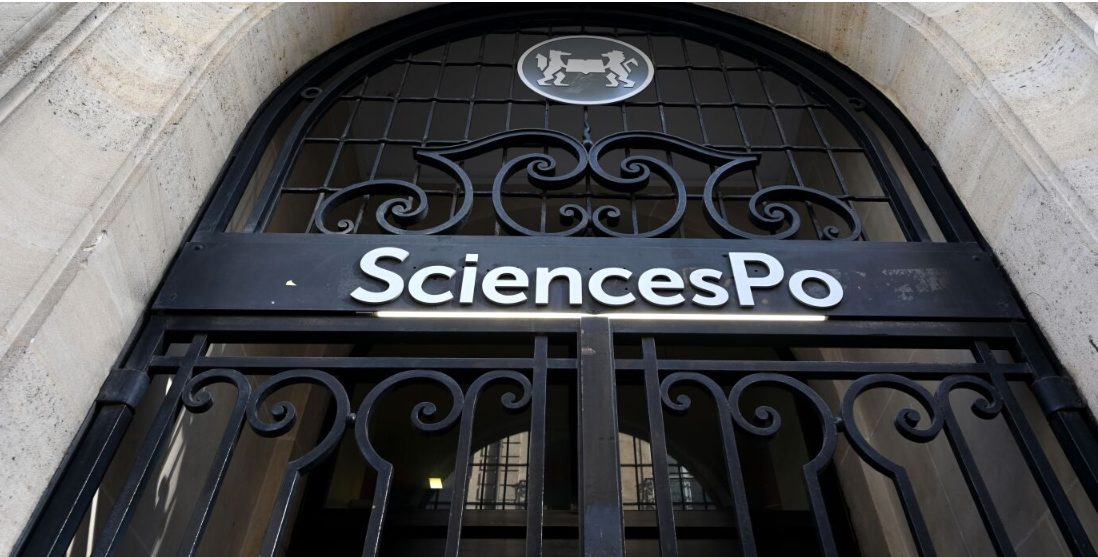
In a previous article (The all but secured appointment of Luis Vassy to head Sciences-Po, another political blunder? | Geopolitics.fr) the candidacy of was mentioned Luis Vassy for the Directorship of Sciences-Po. Frontrunner, backed by the Macron camp, he is the hot favourite.
Whilst the vote to appoint the new director of Sciences-Po is taking place next Thursday and Friday, two candidates who have less backing from the political authorities (though is that a disadvantage when you consider that institutions such as Sciences-Po should remain above political manoeuvring?) remain in the running.
- Mehdi Rostame, Director of the IEP of Aix-en-Provence, Professor of Public Law.
- Arancha Gonzalez, dean of the Sciences Po Paris School of International Affairs.
Mehdi Rostane took over the leadership of the Aix IEP in 2015, whilst the institution was in the middle of a crisis. Indeed, in 2014, the Aix-en-Provence Institute of Political Studies went through a period of severe turbulence following accusations against its previous director for «selling training courses and fake diplomas, particularly in foreign private institutions.». The new director managed to bring back a sense of calm. His aptitude for crisis management is undeniable. Rostane Mehdi has put the Aix IEP back on the right track. His commitment to dialogue is greatly appreciated, as is his ability to unite people. These two qualities seem essential to help the Paris IEP out of the turmoil.
The other outsider is Arancha Gonzalez, who has both a political and senior civil servant profile. Arriving at Sciences-Po following Enrico Letta, the individual concerned is already in place as director of international relations. A continuity which is at once an asset for the internal knowledge of the company, but also a drawback inasmuch as «new blood» seems necessary. Having held high-level office (Spanish Minister for Foreign Affairs 2020-2021) and senior management positions at the European Commission, the United Nations and the WTO (she was Head of Cabinet for Pascal Lamy), her proposal for the institution seems to have received a mixed response.
Since the departure of Alain Lancelot, who headed the institution until 1996, The Paris IEP was considered a golden rattle handed out to political friends. The successive cohort of directors seemed more concerned with leaving a personal mark and using it as a stepping stone to build a future (or even a destiny) for themselves than with ensuring the institution's enduring excellence.
Sciences-Po is not a business school. Law, history, international relations, and economics are taught there. Free-thinkers are forged there, possessing a general culture whose knowledge is not directly and immediately monetisable. It is remarkable to note that among politicians, those who did not go through Sciences-Po (whilst graduating brilliantly from the ENA) suffer from a lack of historical culture and grounding.
The deliberately disruptive side to leave his mark on his time running the establishment, gadgets are no longer necessarily welcome. Robustness, excellence, reliability, a sense of industrial relations, negotiation skills, managerial ability, human qualities and modesty are the qualities that appear most essential to this establishment today.
The die seems to be cast and somewhat loaded. But a burst of independence and resistance to political interference cannot be ruled out!
 French
  English
  Chinese
  Arabic